EndoPeak Ingredients: All Nine Amounts, Printed on the Label
No proprietary blend. Every amount is published. The numbers are the problem, not the disclosure.
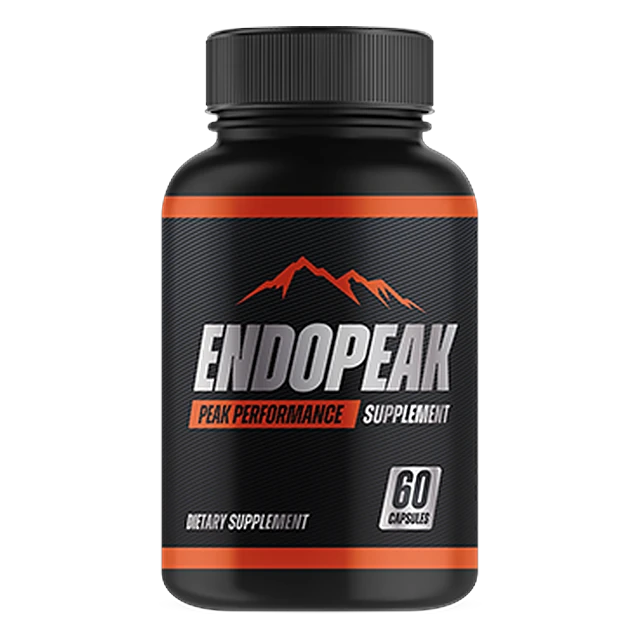
Checked 11 October 2026. Label and price figures checked 11 October 2026. Every source is named below, so you can repeat each check yourself.
Does EndoPeak really publish every ingredient amount?
Yes, all nine, and that's to the seller's credit
EndoPeak prints a milligram figure against all nine of its ingredients. There's no proprietary blend. That's rare in this category, and it's to the seller's credit.
We read the seller's pages and label artwork on 11 October 2026. This page is desk analysis, and we haven't tested EndoPeak.
Most men's health capsules hide their doses inside a proprietary blend. You get a total weight and a list of names.
EndoPeak doesn't. Each of its nine ingredients carries its own milligram figure. You can check every one against the research.
Almost nobody in this category does that. It's to the seller's credit, and we'd rather say so first.
The disclosure isn't the problem. The numbers are. Below you'll find the full panel, the count problem, a dose check per ingredient, and the two minerals.
Every health claim on this page belongs to the seller unless we name a study.
The full EndoPeak Supplement Facts panel, line by line
Transcribed from the seller's own label artwork on 11 October 2026
The label gives a serving size of 2 capsules. It lists 30 servings per container, and the bottle holds 60 capsules.
The directions read, verbatim, "Take two (2) capsules before bedtime."
| Ingredient | Form or part | Amount per serving | Daily Value |
|---|---|---|---|
| Magnesium | As magnesium oxide | 133.3 mg | 32% |
| Zinc | As zinc oxide | 20 mg | 182% |
| Tribulus | Tribulus terrestris, fruit | 500 mg | * |
| Chrysin | Oroxylum indicum, seed | 50 mg | * |
| Epimedium | Epimedium sagittatum, aerial parts | 33.3 mg | * |
| Tongkat ali | Eurycoma longifolia, root | 33.3 mg | * |
| Saw palmetto berries | Serenoa repens | 33.3 mg | * |
| Chinese hawthorn | Crataegus pinnatifida, berry | 33.3 mg | * |
| Winged treebine | Cissus quadrangularis, stem | 33.3 mg | * |
Every line without a percentage carries an asterisk. The label's footnote reads "Daily Value not established."
The label's other ingredients are cellulose (the vegetable capsule), rice flour and magnesium stearate (vegetable).
The supply arithmetic is correct. Sixty capsules at two a day is 30 days a bottle.
That's the whole panel. There's no blend, no hidden line and no "proprietary" anywhere on it.
How many ingredients does EndoPeak actually have?
Three different counts for one bottle
The order page says "8 CAREFULLY-SELECTED INGREDIENTS" and shows eight icons.
The icons are hawthorn berry, tribulus, chrysin, epimedium, saw palmetto, tongkat ali, winged treebine and magnesium.
| Source | Ingredients counted |
|---|---|
| The seller's order page | 8 |
| The label artwork | 9 |
| plainvitamins.com | 12 |
The label declares nine. The one missing from the seller's own showcase is zinc.
Zinc isn't a minor omission. At 20 mg it carries 182% of the Daily Value, the highest figure on the panel.
A third-party listing, plainvitamins.com, publishes twelve. We can't see where those twelve came from.
Trust the label. It's the only one of the three that carries an amount against every name.
Why five ingredients all read exactly 33.3 mg
That is 166.5 mg between them, and 33.3 is a third of 100
Look down the Amount column. Epimedium, tongkat ali, saw palmetto, Chinese hawthorn and winged treebine all read 33.3 mg.
That's an odd coincidence for five plants with five different research histories.
33.3 is a third of 100. Five portions of it make 166.5 mg. Magnesium's 133.3 mg carries the same repeating decimal.
The pattern looks like an allowance split evenly, not doses chosen on their own merits.
We can't see the seller's reasoning. We can only read the label, and the label shows the pattern.
Magnesium reads 133.3 mg, which shares those trailing digits. We aren't drawing a conclusion from that.
The sections below set each figure beside what the studies actually used.
Which EndoPeak doses match the research?
One of nine sits inside the range its own studies used
We searched Europe PMC on 11 October 2026 and read each record we cite.
| Ingredient | EndoPeak | What the research used | PMID |
|---|---|---|---|
| Tribulus | 500 mg | 400 to 750 mg a day | 40219032 |
| Tongkat ali | 33.3 mg | 200 mg a day for six months | 33541567 |
| Saw palmetto | 33.3 mg | 320 mg a day, the standard | 42280395 |
| Chrysin | 50 mg | Animal studies only | 42163694 |
| Epimedium | 33.3 mg | Rat and test-tube studies only | 42533488 |
| Zinc oxide | 20 mg | Absorbs 49.9% against 61.3% for citrate | 24259556 |
| Magnesium oxide | 133.3 mg | Described as poorly bioavailable | 40931546 |
| Chinese hawthorn | 33.3 mg | No human erectile trial found | None |
| Winged treebine | 33.3 mg | No human erectile trial found | None |
One ingredient of nine is dosed where its own research dosed it. That's tribulus.
The others are a fraction of the trial dose, backed by animal work, or poorly absorbed. Two have no human erectile trial at all.
Tribulus is the one dose that fits its trials
500 mg sits inside a 400 to 750 mg range, and the evidence is still weak
Let's say this plainly. EndoPeak's 500 mg of tribulus is inside the range the trials used.
A 2025 review in Nutrients (PMID 40219032) covered human supplementation studies at 400 to 750 mg a day.
That's a point in the product's favour. It's the largest amount in the bottle, and it matches its own literature.
The same review found no clear evidence that tribulus raises testosterone. The authors rate the level of evidence as low.
So the dose is right and the result is weak. Both statements are true, and you should hold both.
Do tongkat ali and saw palmetto reach their trial doses?
Tongkat ali has the best human evidence in the bottle, at one sixth of the dose
Tongkat ali has the strongest human evidence in the bottle. We want to be clear about that.
A 2022 meta-analysis in Medicina (PMID 36013514) pooled five randomised trials. It found a significant rise in total testosterone.
The standardised mean difference was 1.352, with a 95% confidence interval of 0.565 to 2.138.
That's a genuine positive finding. The problem is the dose in the bottle, not the ingredient.
The abstract doesn't state the doses, so we went to a named trial. Maturitas 2021 (PMID 33541567) ran for six months.
It was a double-blind, placebo-controlled, four-arm trial in 45 men with androgen deficiency. The dose was 200 mg a day.
EndoPeak declares 33.3 mg. That's one sixth of the trial dose.
Erectile function improved in both intervention arms. The best result came from men who took 200 mg and trained under supervision three times weekly.
So even at the full dose, the exercise carried part of the result.
Saw palmetto next. Its standard clinical dose is 320 mg a day.
A 2026 trial in Nutrients (PMID 42280395) used 320 mg once daily as the established comparator. It ran twelve weeks in 30 men.
EndoPeak has 33.3 mg, about a tenth of that. The trial studied urinary symptoms, so we cite it for the dose only.
What research exists for the remaining four ingredients
Animal studies, test-tube work and two gaps
Chrysin is 50 mg of Oroxylum indicum seed. A 2026 review in Current Medicinal Chemistry (PMID 42163694) covers it.
The review says preclinical studies show benefits for testosterone and testicular function. Preclinical means animals.
It also says chrysin's clinical use is limited by "poor solubility, low oral bioavailability, and rapid metabolism."
The review points to nanoformulation as the fix. The label lists plain seed extract.
Epimedium has rat and test-tube evidence only. A 2026 rat study (PMID 42533488) found improved erectile function after nerve injury.
The seller's own epimedium reference, PMID 18778098, is a test-tube study of icariin derivatives inhibiting PDE5.
We found no human dose-response trial of epimedium for erectile function.
Chinese hawthorn and winged treebine are 33.3 mg each. We searched Europe PMC on 11 October 2026 for a human erectile trial of either.
We found none. A gap in one database isn't proof they do nothing, but we have no trial to show you.
Why are EndoPeak's two minerals in the weakest forms?
Magnesium oxide and zinc oxide, the only numbers you can benchmark
Magnesium and zinc are the only two lines with a Daily Value. They're the only numbers on the panel you can benchmark.
Magnesium is 133.3 mg at 32% of the Daily Value. Zinc is 20 mg at 182%.
Both come as oxides. Magnesium oxide and zinc oxide are the cheapest and least absorbable salt of their mineral.
A 2025 review of randomised trials (PMID 40931546) found magnesium citrate and chloride well absorbed. Magnesium oxide was poorly bioavailable.
For zinc, a 2014 crossover study (PMID 24259556) compared three forms in 15 healthy adults. Each took 10 mg of zinc without food.
Median absorption was 61.3% from citrate and 49.9% from oxide. Three participants absorbed little or none from the oxide.
EndoPeak's directions say to take two capsules before bedtime. The directions don't mention food, so the study's no-food condition may apply.
We wouldn't overstate it. The study used 10 mg, and EndoPeak's panel says 20 mg.
One more point. A 182% Daily Value describes what's in the capsule. It doesn't describe what your body absorbs.
Why does the order page show photos of other herbs?
Six of eight ingredient photographs are for substances not in the bottle
The order page loads eight ingredient photographs from its own image folder, endopeak24.com/assets/img/.
We requested each file directly on 11 October 2026. All eight resolve.
| Photograph | On the label? |
|---|---|
| Chinese hawthorn | Yes |
| Epimedium | Yes |
| Ginseng | No |
| Niacin | No |
| Catuaba | No |
| Muira puama | No |
| Ginkgo biloba | No |
| Capsicum | No |
Two photographs match the label. The other six show ginseng, niacin, catuaba, muira puama, ginkgo biloba and capsicum.
None of those six is an EndoPeak ingredient.
That also matches the reference list. The seller publishes nine references, and six are about stem cells, hypertension, DHEA, vitamin D, niacin and folate.
Only three touch anything in the bottle. One of those three is a test-tube study.
The seller cites a review (PMID 26531010) that calls the available literature on these substances "generally of low quality."
It also cites a review (PMID 29633089) whose one encouraging finding is for ginseng. Ginseng isn't in EndoPeak.
The page looks assembled for a different formula. That's our reading, and the label is the document to trust.
Why this page prints the EndoPeak label verbatim
Bing's generated answer names two ingredients that aren't on it
We searched Bing US on 11 October 2026. Its generated answer for the ingredient queries named nettle root and boron.
Neither is on the EndoPeak label. Neither appears anywhere in the seller's artwork.
That's why we printed the panel line by line above. Check any ingredient list against that table.
If another site lists nettle root or boron, it isn't describing this label.
For the verdict and score, read our EndoPeak review. The does-it-work page covers the trial doses. The side-effects page covers who should avoid it.
That link goes to the seller's own site. We earn a commission if you buy, at no extra cost to you, and it never changes what we write. Our full review has the score and the verdict.
This page is information, not medical advice. Statements about supplements have not been evaluated by the FDA.