Does Trimology Work? The Ingredients Have Real Trials, and the Capsule Has a Problem
The trials behind these ingredients are real and some are good. They also used doses measured in grams, which is where this gets difficult.
Checked 8 October 2026. Label and price figures checked 8 October 2026. Every source is named below, so you can repeat each check yourself.
No study of Trimology, real trials of what's in it
The Europe PMC result, and the sum that decides the product
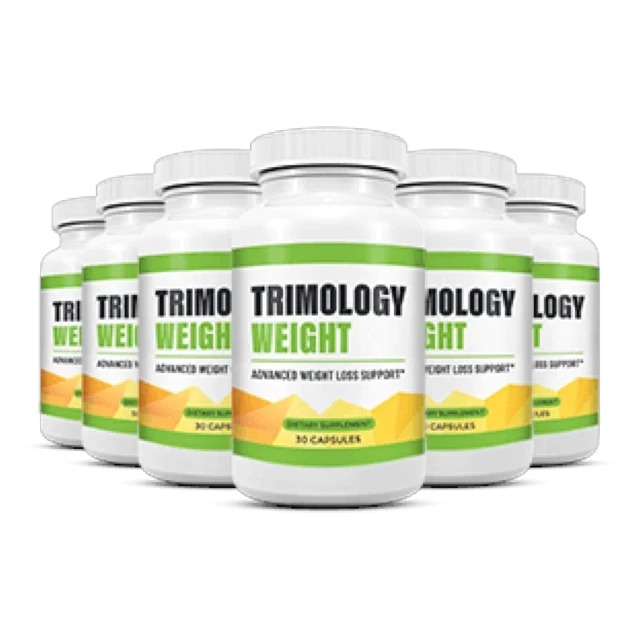
No study has tested Trimology itself, so nothing proves the capsule works. The five ingredients have real trials, but the inulin trial used 15 g a day. A published label holds 0.65 g per capsule. Trimology is one capsule.
We searched Europe PMC for "trimology" on 29 September 2026. It returned one record.
The record is a 2024 paper titled "Pythia: Non-random DNA repair allows predictable CRISPR/Cas9 integration and gene editing". It's a gene-editing paper. The word matches by accident, and the paper has nothing to do with this supplement.
So there's no published study of the product. Nobody has measured what one Trimology capsule does to weight, appetite or anything else.
The seller concedes this itself. Its page prints: "Some research suggests this may be the case. Research is on individual ingredients, not the finished product. Results may vary."
It's the most candid sentence we've found on any of the four sales pages we've read. It admits the point our reviews usually have to make for the seller. We credit it here, by name.
That leaves a fairer question. What do the trials of the ingredients show? And can a single capsule carry what those trials used?
Is the evidence for Trimology's ingredients real?
Hundreds of randomized trials, and one strong result
Europe PMC lists randomized controlled trial records for all five ingredients. Inulin has 600, resistant starch 314, Akkermansia 189, B. infantis 160 and C. butyricum 79.
Restrict Akkermansia to overweight or obese people and 59 records remain. It's the best-evidenced ingredient list we've reviewed, and we say so plainly.
A count shows how much research exists. It doesn't show what the research found. So here are the two trials that matter most.
The strong one. PMID 42120725 appeared in Nature Medicine in 2026. Its title is "Pasteurized Akkermansia muciniphila MucT for weight loss maintenance in people with overweight and obesity: a controlled randomized trial." It's registered as NCT05417360.
The authors report: "the MucT group had a greater net weight loss from baseline to end of maintenance than the placebo group (3.1 ± 0.7 kg, P 0.009) ... No serious adverse events related to the treatment were observed."
Put plainly, the treated group lost 3.1 kg more net weight than placebo. That's about 6.8 pounds. The p value of 0.009 is well under the usual 0.05 threshold. The trial is recent, registered and in a major journal.
It's genuinely good evidence, and it deserves credit. Three limits apply.
First, it tested weight-loss maintenance, not a few weeks of dieting. Second, it used the pasteurized, heat-treated strain. The seller says only "Pure Akkermansia muciniphila". The ingredients page explains why that gap matters.
Third, it tested that strain and not Trimology. We haven't put a dose on that trial, so we can't say how it compares with a capsule.
The dose one. PMID 42356231 appeared in Nutrients in 2026. Its method reads: "participants (n 56) were randomized to receive 15 g/day of ITFs (n 29) or a placebo (n 27) for 8 weeks." It's registered as NCT05971992.
ITFs are inulin-type fructans, the fibre in chicory root. The patients had psoriasis. The trial found no significant within-group changes, and the authors urge caution.
We aren't citing it for a weight result. We cite it for one number, the dose. Fifteen grams a day is roughly a tablespoon of powder.
Resistant starch trials in this literature run in the same territory. They're measured in grams, not milligrams.
Can one capsule hold a 15 g inulin dose?
Fifteen grams against one capsule
Here's the sum that decides this product. You can repeat every step on a phone calculator.
| Step | Figure | Where it comes from |
|---|---|---|
| Inulin dose in the trial | 15 g a day, for 8 weeks | PMID 42356231 |
| Inulin on a published label | 1.95 g across 3 capsules | NOW Prebiotic Inulin Fiber |
| Inulin per capsule | About 0.65 g | 1.95 divided by 3 |
| Capsules a day to reach 15 g | 23 | 15 divided by 0.65 gives 23.08 |
| Trimology's capsules a day | 1, carrying five ingredients | The seller's page |
| Best case, share of the trial dose | 4.3% | 0.65 divided by 15, if the capsule were all inulin |
Take it slowly. The NOW label prints 1.95 g of inulin across three capsules, with nothing else in them. Divide 1.95 by 3. Each capsule holds about 0.65 g.
The trial used 15 g a day. Divide 15 by 0.65 and you get just over 23. That's 23 capsules a day of a single-ingredient inulin product, to match one trial.
Trimology is one capsule a day. Now be generous. Suppose that one capsule held nothing but inulin, at the same amount as the NOW capsule. It would carry 0.65 g. That's 4.3% of the trial dose.
That's the ceiling. The capsule also holds resistant starch and three bacteria. So the real figure for inulin has to be lower. We can't see the seller's capsule size, so we borrow a published label as the yardstick.
This is why real inulin products are sold as powders in tubs. Fifteen grams is a tablespoon of powder, and you scoop it. A capsule is the wrong container for that job.
The seller calls the format a convenience: "All in one easy-to-swallow capsule taken once daily." For these fibres, the convenience is the problem.
We only have a trial dose for inulin. We don't state one for the bacteria, and the seller states none for anything. That's the second half of the problem.
This is an arithmetic problem with the format. It isn't an attack on the ingredients, which are good. A Supplement Facts panel would settle it in one line, and the page doesn't publish one.
Can you look up the six studies it describes?
Specific numbers, and no citations
The sales page describes six studies with specific numerical results. It cites none by author, journal, year or identifier.
We searched Europe PMC for each one. We couldn't identify them from what the page gives. We aren't saying they don't exist. We're saying you can't check them.
| The seller's claim | What we found |
|---|---|
| A "Cambridge-led double-blind, placebo-controlled trial" of RS2, average loss 6.5 pounds in 8 weeks | Not identified. Resistant starch has 314 weight-related trial records, but none matched these details. |
| A "brand-new 2024 clinical trial" of potato starch, twice the weight loss of placebo | Not identified from the details given. |
| A "2024 meta-analysis" of 32 studies and over 1,100 people, chicory root, "300% more belly fat" lost | Not identified. "300% more" isn't how meta-analyses report effects. |
| A "12-week study from Tokyo Medical University" of C. butyricum, average loss 6.5 pounds | Not identified. C. butyricum has 79 trial records, but none matched. |
| Akkermansia, over 5 pounds "in just a few weeks" | The closest real trial is PMID 42120725. It measured maintenance over a longer period and used the pasteurized strain. |
| B. infantis, binge episodes down 71%, late-night snacking down 84% | Not identified. B. infantis has 160 trial records, but none matched these details. |
For Akkermansia, the closest real trial is better than the seller's summary suggests. We can't say it's the study the seller means.
Now look at the numbers. Two of the six report exactly 6.5 pounds. One is resistant starch, in a study the seller ties to Cambridge. The other is C. butyricum, in a study tied to Tokyo.
Different ingredients. Different countries. The same figure. Coincidences happen. But a reader has no way to check either one.
A real citation takes one line. An author, a journal and a year would let you find the paper in a minute. The seller's page offers none.
The seller tells you the study evidence is on ingredients, not the product. The six uncited results sit awkwardly beside that honest sentence.
So does Trimology work?
What we can say, and what we can't
Here's what we can say. The ingredients are well studied. One trial of one of them is strong. The seller admits the product itself has no study. The 180-day guarantee is the best we've seen. It matches the seller's own 180-day course, so you're covered to the end of it.
Here's what we can't say. We can't say one capsule delivers a studied dose of any ingredient. The page publishes no amounts, so nothing lets us check.
That's why Trimology scores 3 out of 10 in our full review. It ties with Gelatine Sculpt. Only EndoPeak (5) and VisiFlora (4) score higher.
Fibre at real doses can cause gas and bloating, and probiotics aren't for everyone, particularly anyone immunocompromised. Ask your doctor or pharmacist first if you take medication, are pregnant, nursing or have a gut condition.
Questions about whether Trimology works
Short answers, each traceable to something above
Is there a clinical study of Trimology?
No. Europe PMC returns one record for "trimology". It's a 2024 CRISPR gene-editing paper that matches the word by accident.
What did the Akkermansia trial find?
The pasteurized group had 3.1 kg greater net weight loss than placebo, at p 0.009. It ran in Nature Medicine, PMID 42120725, with no serious adverse events.
How many capsules would reach the inulin trial dose?
About 23 a day. The trial used 15 g, and a published label holds 0.65 g of inulin per capsule. Trimology is one capsule.
Does the seller admit there's no study of the product?
Yes. Its page says "Research is on individual ingredients, not the finished product. Results may vary."
Can you check the six studies on the sales page?
No. None is cited by author, journal, year or identifier. We searched and couldn't identify them, but we aren't claiming they don't exist.
For the five ingredients and the Akkermansia question, read the ingredients page. The packs and the guarantee are on the price page.
This page is desk analysis. We haven't tested Trimology. We read the seller's page and queried Europe PMC on 29 September 2026. If something changes, tell us through the contact page and we'll add a dated correction.
That link goes to the seller's own site. We earn a commission if you buy, at no extra cost to you, and it never changes what we write. Our full review has the score and the verdict.
This page is information, not medical advice. Statements about supplements have not been evaluated by the FDA.