Trimology Review: Good Ingredients, the Best Guarantee We've Seen, and One Capsule That Can't Hold Them
The ingredients are well studied and the 180-day guarantee is the best we have seen. Then you work out how much of anything fits in one capsule.
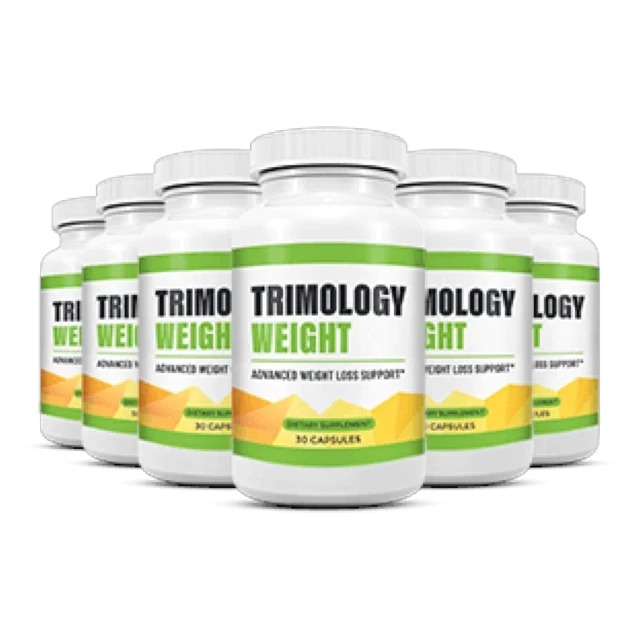
Checked 8 October 2026. Label and price figures checked 8 October 2026. Every source is named below, so you can repeat each check yourself.
What Trimology gets right, and where it falls down
Every line below is checked against the seller's own pages, read 8 October 2026.
In its favour
- A 180-day money-back guarantee on every pack.
- The best-evidenced ingredient list we've reviewed.
- A strong 2026 Nature Medicine trial on Akkermansia.
- The seller's honest sentence about its research.
- Correct per-bottle sums and no countdown timer.
Against it
- One capsule can't hold a studied dose of these fibers.
- There's no label and no amount for any ingredient.
- Six numerical study claims come with no citation.
- "SAVE 65%" is 30.7%, and the crossed-out prices disagree.
- The scarcity claims contradict each other.
Trimology, checked against its own sales page
What the seller publishes, what holds up, and the one sum that decides the score
Trimology is a once-daily gut-health capsule with five ingredients, sold through ClickBank. Packs run from $158 for two bottles to $294 for six. It has our best guarantee and best-evidenced ingredients. But it publishes no amounts, and one capsule can't hold a studied dose. We score it 3 out of 10.
We landed on 3 out of 10, checked 8 October 2026. The guarantee is the best on our site and earns full marks. Nothing else does. The seller publishes no amounts. A working dose of these fibers is grams. This is one capsule a day.
We read the rendered page in a browser, not a background fetch.
Opened again on 8 October 2026. Everything matched.
Every study we cite came from a live Europe PMC query.
We looked for each uncited study. We report what we found.
Trimology scores 3 out of 10. The once-daily capsule holds five gut-health ingredients, costs $158 to $294 and carries a 180-day guarantee. The inulin trial dose was 15 g a day, far more than a capsule holds.
Disclosure: if you buy through a link on this page we may earn a commission. It costs you nothing extra. It doesn't change our score. We write the review before we check the commission.
What is Trimology, and who sells it?
A capsule, a bottle count and a long origin story
Trimology is a capsule. The seller says to take it "All in one easy-to-swallow capsule taken once daily with your morning coffee or tea".
The seller calls two bottles a 60-day supply, three a 90-day supply and six a 180-day supply. That fixes one bottle at 30 days. The page publishes no capsule count.
The page address carries a ClickBank hop ID, so ClickBank is the retailer.
The page tells a story. A narrator named Michael Adams, 46, describes himself as an environmental scientist near Boulder, Colorado. He credits a trip to Uganda, a bitter green banana and an 11-second ritual.
The page also coins a term, the "BioSignal Network". It says this internal command center "vanishes after 35 in most women". One headline reads "This 1 Green Banana BEATS 1,000 Weight Loss Shots".
We treat the story as marketing. It isn't evidence about the capsule. Europe PMC returns one record for "trimology", a 2024 gene-editing paper that matches the word by chance. No published study of the product exists.
What does Trimology get right?
We looked for reasons to credit this product and found more than usual
Most products we check fail on the basics. This one passes several, so credits come first.
The 180-day guarantee. Every order card states "180 DAYS MONEY BACK". That's three times the 60 days the other three products on our site offer.
It also matches the seller's own advice: "James recommends using Trimology for at least 180 days". A buyer who follows it is still covered when the last bottle runs out. It's the best guarantee on our site.
The best-evidenced ingredient list we've reviewed. All five named ingredients have randomized human trials behind them. Inulin has 600 records, resistant starch 314, Akkermansia 189, B. infantis 160 and C. butyricum 79.
A real, strong trial exists. In 2026, Nature Medicine published a controlled randomized trial of pasteurized Akkermansia muciniphila (PMID 42120725). It enrolled people with overweight and obesity and is registered as NCT05417360.
The authors report "a greater net weight loss from baseline to end of maintenance than the placebo group (3.1 ± 0.7 kg, P 0.009)". No serious adverse events related to the treatment were observed.
That's about 6.8 pounds. It's a recent, registered result in a major journal, and it deserves its credit.
The seller prints an honest sentence, unprompted. Mid-page, it writes: "Some research suggests this may be the case. Research is on individual ingredients, not the finished product. Results may vary."
That's the most honest line on any sales page we've read. It concedes the point our reviews usually make for the seller.
The per-bottle sums are right. We multiplied each bottle price by the bottle count. All three packs add up.
| Per bottle | Our sum | Page total | |
|---|---|---|---|
| 2 bottles | $79 | 2 x 79 = $158 | $158 |
| 3 bottles | $59 | 3 x 59 = $177 | $177 |
| 6 bottles | $49 | 6 x 49 = $294 | $294 |
The six-pack's "JUST $1.63 PER DAY" is right too. $294 over 180 days is $1.633.
The terms are clean. The affiliate network lists one restriction for this offer, "No SMS". No countdown timer ticks above the order blocks.
We first read these figures on 29 September 2026 and confirmed them on 8 October 2026.
Now the problems.
The five ingredients, and the trials behind each
Real evidence exists for all five. None exists for the capsule
Here are the five, with the seller's claim for each. The counts are randomized controlled trial records in Europe PMC, searched on 29 September 2026. Inulin and resistant starch were searched with weight or body fat.
They measure how much human research exists. They say nothing about this capsule.
Seller: "Concentrated chicory root with verified inulin content that amplifies butyrate production by up to 300%". No source is given for the 300%. A 2026 trial used 15 g a day of inulin-type fibers (PMID 42356231).
Seller: "Pharmaceutical-grade RS2 from premium potato starch that feeds your gut's butyrate-producing bacteria". Trials in this literature run in grams, not milligrams.
Seller: "Pure Akkermansia muciniphila supports appetite regulation and metabolic health - naturally". The Nature Medicine trial studied it, with a caveat below.
Seller: "Stabilized Bifidobacterium infantis that helps regulate the hormones controlling hunger and fullness". We counted 58 records that touch binge eating or cravings.
Seller: "Clinically-studied Clostridium butyricum that acts like a butyrate factory in your gut". The thinnest record of the five.
A trial result belongs to the dose the trial used. This seller won't say what dose is in the capsule. Our ingredients page takes each one in turn.
Can one Trimology capsule hold a studied dose?
One capsule, five ingredients, and a trial that used 15 grams
This is where the review turns. It's a sum, and you can repeat it yourself.
The inulin trial gave people 15 g a day for 8 weeks. Fifteen grams is roughly a tablespoon of powder.
Now look at a real inulin capsule. NOW Prebiotic Inulin Fiber prints a full label. One serving is three capsules holding 1.95 g of inulin and nothing else. Divide 1.95 g by three and each capsule holds 0.65 g.
Now divide the trial dose by one capsule. 15 g divided by 0.65 g is 23.08. Rounded down, that's 23 capsules a day.
Inulin: the trial dose, one capsule, and Trimology
The first three bars are grams a day. The last two are capsules a day.
The yardstick is a published inulin label. Trimology publishes no capsule size.
Trimology is one capsule a day, and it carries five ingredients. Suppose that capsule were nothing but inulin. It would hold only about 0.65 g, or 4.3% of the trial dose.
It isn't nothing but inulin. Four other ingredients share the space.
Resistant starch trials run in grams too. That's what these fibers need to reach the colon and feed bacteria. A single capsule can't hold five ingredients each at a studied dose. This is why real inulin products are sold as powders in tubs.
We aren't attacking the ingredients. They're well studied, and we've credited them. The problem is arithmetic and format. With no label, nobody can check how close the capsule comes.
One caution keeps this honest. The inulin trial enrolled people with psoriasis and found no significant within-group changes. We cite it for its dose only. A trial dose isn't a minimum, but the scale is grams, not milligrams.
Five names, no amounts
What the label would tell you, and what Bing says instead
The page says each daily dose delivers five named ingredients. A Supplement Facts panel appears nowhere on it.
No amount is given for any of the five. No capsule count appears either, and the page never says which form of Akkermansia it uses.
Five names are a start, and many sellers give a reader nothing. The page says the product is "produced in small batches at our FDA-registered, GMP-certified facility in the U.S." It names no facility.
Bing's AI answer, read on 29 September 2026 for "trimology review", lists a formula with three extras.
| On the seller's page? | |
|---|---|
| RS2 resistant starch | Yes |
| Chicory root fiber (inulin) | Yes |
| Clostridium butyricum | Yes |
| Akkermansia muciniphila | Yes |
| Bifidobacterium infantis | Yes |
| Green tea extract (EGCG) | No. Never mentioned |
| Garcinia Cambogia (HCA) | No. Never mentioned |
| Digestive enzymes | No. Never mentioned |
Bing gets the five right, then adds three the seller never lists. Green tea extract and Garcinia Cambogia are stimulant-adjacent botanicals. The page says "No synthetic fat-burners, no stimulants, no caffeine."
Bing also errs on price. It says "~$69 per bottle (varies by package)". The seller's prices are $79, $59 and $49.
It errs on the guarantee too: "60- to 180-day money-back guarantee, depending on retailer". Every order card states 180 days.
Bing understates the product's best feature, so we correct it in the seller's favor. A lookalike domain, trimoloji.com, also ranks for the term.
Which Akkermansia is in the capsule?
The trial used heat-treated bacteria, and the page doesn't say what it uses
The Nature Medicine trial tested pasteurized Akkermansia. Pasteurized means heat-treated, so the bacteria aren't alive. That's the form its result belongs to.
Trimology's page says "Pure Akkermansia muciniphila". It never says whether that's the pasteurized form or a live culture.
Live and pasteurized are different products with different evidence. A live culture has well-known delivery problems. A reader can't tell which is in the bottle, so the trial may not apply.
Six studies, no citations
We searched for each one. A reader can't check any of them
The page describes six studies with specific numbers. It gives no author, journal, year or identifier for any of them. We searched Europe PMC for each one.
- A "Cambridge-led double-blind, placebo-controlled trial" of RS2, with an average loss of 6.5 pounds in 8 weeks. Resistant starch has 314 weight-related trials, but we couldn't identify this one from the details given.
- A "brand-new 2024 clinical trial" of potato starch, with twice the weight loss of placebo. We couldn't identify it.
- A "2024 meta-analysis" of 32 studies and over 1,100 people on chicory root, with "300% more belly fat" lost. We couldn't identify it. Meta-analyses don't normally report effects that way.
- A "12-week study from Tokyo Medical University" on Clostridium butyricum, with 6.5 pounds lost. That ingredient has 79 trials. We couldn't identify this one.
- Akkermansia, with "over 5 pounds" lost "in just a few weeks". A real trial exists and it's better than this summary suggests. But it measured weight-loss maintenance over a longer period, and it used the pasteurized strain.
- Bifidobacterium infantis, with binge episodes down 71% and late-night snacking down 84%. We couldn't identify it.
We're not saying these studies don't exist. We're saying we searched for each one and couldn't identify it from what the page gives. A reader has no way to check them.
One pattern stands out. Two of the six report exactly 6.5 pounds, from different ingredients in different countries.
Claims, and where they slip
A discount that isn't, a review used twice and a story with moving numbers
"SAVE 65%" is really 30.7%. The six-bottle card crosses out $424 and charges $294. That's $130 off. As a share of $424, $130 is 30.7%.
A genuine 65% off $424 would be $148.40. That's about half what the seller charges. The claimed discount is more than double the real one.
The crossed-out prices don't agree. The three struck-through totals, $165, $217 and $424, imply list prices of $82.50, $72.33 and $70.67 a bottle. No single regular price sits behind them.
Two testimonials are word for word identical. The page shows "Monica, 37. Verified Purchase | Jun 02" and "Patricia, 58. Verified Purchase | May 18". Both carry this paragraph, in full.
"I used to hide Oreos in my desk drawer for my 3pm crash. My coworkers joked about my 'secret stash' but it wasn't funny to me. Now? That desperate sugar craving never shows up. I actually forgot about a chocolate bar in my purse last week... WHO FORGETS ABOUT CHOCOLATE? My energy stays steady all day, and I'm not white-knuckling through afternoons anymore."
The text matches, down to the capitalized aside, and it was still live on 8 October. Two different women can't have written it. The page shows no way to verify either label.
The weight-loss figure keeps changing. The narrator's wife lost "nearly 55 pounds", then "over 50 pounds", then "53 pounds", then "more than 50 pounds". That's four versions on one page.
The drug comparison has no source. Two tables name Ozempic directly. They attribute "Nausea, Vomiting" to the drugs and "None reported" to the capsule. The page publishes no study of the capsule, so that entry has nothing under it. Its "less than 0.5%" digestive-adjustment survey isn't published either.
Stock that can't be true, and counters that don't move
Three claims that can't all hold together
The page says "our lab can only craft 500 bottles of Trimology every 90 days". It also says "over 147,000 women have experienced what Sarah did". A third claim is a counter we read on two dates.
Start with production. 500 bottles every 90 days is about 2,028 bottles a year. The seller recommends a 180-day course, which is six bottles a customer. At that rate the stated production supplies roughly 338 customers a year.
Reaching 147,000 women at six bottles each would need about 882,000 bottles. At the stated rate, that's more than four centuries of production.
Now the counters. The page shows a customer counter and a "Bottles Left" counter, both presented as live. It says "thousands more joining daily" and that stock "sells out fast".
We read 147030 on 29 September and 147030 again on 8 October. We read "400 Bottles Left" on both dates too.
| 29 September 2026 | 8 October 2026 | |
|---|---|---|
| Customer counter | 147030 | 147030 |
| "Bottles Left" | 400 | 400 |
Nine days apart, neither number moved by one. No customer was added on a page that says thousands join daily. No bottle left a stock counter on a page warning the batch is nearly gone.
We aren't guessing from how the numbers look. We wrote down what we read on two dates. You can repeat the check by opening the page twice.
147,000 customers, 500 bottles every 90 days and a counter that never moves can't all be true. That's why the scarcity pitch counts against the page.
How much does Trimology cost?
Three packs, correct sums, and a guarantee on every one
We read the three order blocks on 29 September 2026 and confirmed them on 8 October 2026. No pack states a shipping amount on its card.
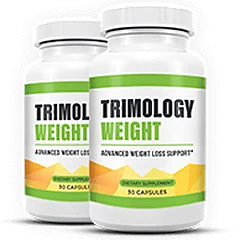
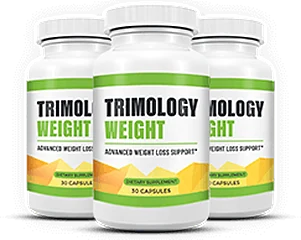
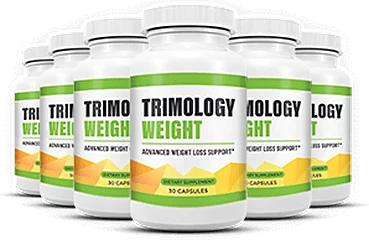
Per-day figures divide each total by the days the seller names, at one bottle per 30 days. The page publishes no capsule count, so we can't test that.
Every card carries the same 180-day guarantee. The six-bottle pack is a 180-day supply, so the window covers the whole course. We haven't tested a refund. Our price page walks through every pack in more detail.
One capsule with the amount printed
What disclosure looks like, and where a single capsule runs out
We looked up NOW Prebiotic Inulin Fiber on nowfoods.com on 29 September 2026. We chose it because it covers one ingredient Trimology names, and it prints its amount. It isn't a recommendation.
| Trimology | NOW Prebiotic Inulin Fiber | |
|---|---|---|
| Amount per serving | Not published | Organic inulin (FOS) 1.95 g (1,950 mg) per 3-capsule serving |
| Capsules per serving | 1 | 3 |
| Ingredients in the capsule | 5 | 1 |
| Supplement Facts panel | None | Published |
| Price | $158 to $294 a pack | $29.99 |
| Size | Capsule count not published | 180 veg capsules, 60 servings |
| Cost a day | $1.63 to $2.63 | About $0.50 |
Price isn't the complaint. Trimology's $1.63 a day buys five ingredients. A plain inulin capsule costs less because it holds one thing.
The complaint is what a capsule can carry. NOW needs three capsules for 1.95 g of one fiber. That's still far below the trial's 15 g. Trimology gets one capsule and five ingredients. NOW prints its number. Trimology gives you nothing to hold against a trial.
Where it falls short, and what's fair to say
Five real drawbacks, and the credits that hold up
The trial used 15 g a day. A published label holds 0.65 g a capsule.
No Supplement Facts panel, and no word on which Akkermansia form is used.
No author, journal, year or identifier. We searched and couldn't identify them.
"SAVE 65%" is 30.7%. Two testimonials share identical text.
500 bottles every 90 days can't supply 147,000 customers. Two counters froze.
Where it falls short
- One capsule can't hold a studied dose of these fibers.
- There's no label and no amount for any ingredient.
- Six numerical study claims come with no citation.
- "SAVE 65%" is 30.7%, and the crossed-out prices disagree.
- The scarcity claims contradict each other.
What's in its favor
- A 180-day money-back guarantee on every pack.
- The best-evidenced ingredient list we've reviewed.
- A strong 2026 Nature Medicine trial on Akkermansia.
- The seller's honest sentence about its research.
- Correct per-bottle sums and no countdown timer.
Who should buy it, and who should skip it?
A quick way to sort yourself into one list or the other
It might suit you if the guarantee matters most. Every pack is covered for 180 days, and the two-bottle pack is the cheapest way to try it.
Skip it if you want a capsule you can hold against a trial.
Our does it work page sets out the trial results in more detail.
How did we check Trimology?
Five checks, in the order we ran them
Open the sales page in a browser. Read the order blocks, FAQ and footer.
Find the Supplement Facts panel. If there's none, note it.
Search the product, each ingredient and every study the page describes.
Check each discount. Divide the trial dose by what one capsule holds.
Re-read every price, claim and counter. Compare both dates.
Why did we score Trimology 3 out of 10?
What lifted the score, and what holds it down
Our rubric scores four parts. Trimology earned 1 of 4 for disclosure and 0 of 3 for dosing. It earned 2 of 2 for money back and 0 of 1 for honesty.
Money back is the one full mark. Every order card says 180 days, three times the category norm. That matches the seller's own 180-day course. No other product on our site earns full marks here.
Six problems held the rest down. One capsule can't hold a 15 g dose. There's no label. Six studies can't be checked. "SAVE 65%" is 30.7%. Two testimonials are identical. The scarcity claims can't all be true.
Trimology ties Gelatine Sculpt at 3. Only EndoPeak (5) and VisiFlora (4) score higher.
It can't score higher until the seller prints its amounts and a capsule can carry a studied dose. The ingredients aren't the issue. The label and the format are.
Questions buyers ask about Trimology
Short answers, each traceable to something on this page
What is Trimology?
A once-daily capsule sold through ClickBank. The seller names five ingredients and publishes no amounts.
How much does Trimology cost?
Two bottles cost $158, three cost $177 and six cost $294. That works out to $2.63, $1.97 and $1.63 a day.
Does Trimology have a money-back guarantee?
Yes, 180 days on every pack. That covers a full six-bottle course.
Has Trimology been tested in a clinical trial?
We found no published study of the product. Its ingredients have trials, including a 2026 Nature Medicine trial.
Why can't one capsule hold a trial dose?
The inulin trial used 15 g a day. One capsule of a published inulin label holds about 0.65 g, so matching the trial takes 23.
How we reviewed this
- Read the rendered sales page in a browser on 29 September 2026, order blocks and footer included.
- Recorded every pack, price and discount as shown, then checked each sum.
- Opened the page again on 8 October 2026 and compared it with the first capture, including two counters.
- Queried Europe PMC live for the product, each ingredient and each of the six uncited studies. Read the NOW label.
- Read the Bing answer a US searcher sees and checked it against the seller's page.
- We didn't take the product or test a refund. This is desk research, with no invented customer stories.
If any of this stops matching what you find, tell us through the contact page. We'll correct it with a dated note. Our scam page covers the testimonial and counters in more detail.
That link goes to the seller's own site. We earn a commission if you buy, at no extra cost to you, and it never changes what we write. Our full review has the score and the verdict.
This page is information, not medical advice. Statements about supplements have not been evaluated by the FDA.