Trimology Ingredients: The Five It Names, and the Three Bing Added
Five ingredients, all with real human trials behind them, and not one milligram published for any of them.
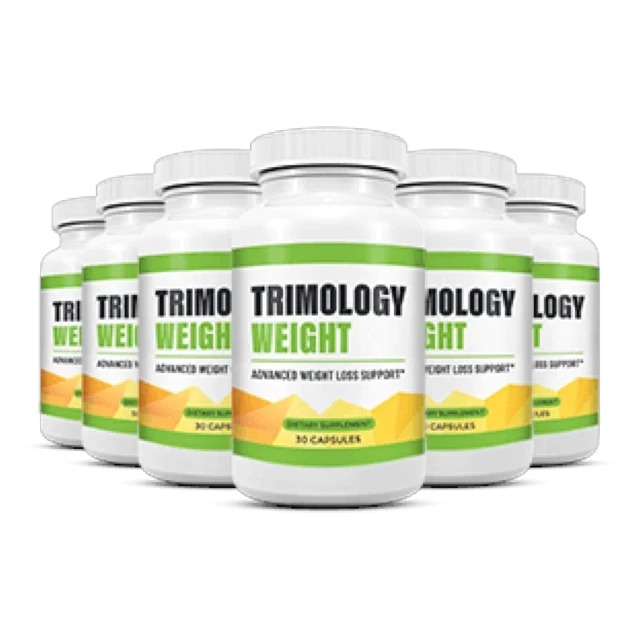
Checked 8 October 2026. Label and price figures checked 8 October 2026. Every source is named below, so you can repeat each check yourself.
What ingredients does Trimology list?
What the seller lists, and what Bing adds that the seller doesn't
Trimology's seller names five ingredients: RS2 resistant starch, chicory root, Clostridium butyricum, Akkermansia muciniphila and Bifidobacterium infantis. All sit in one daily capsule. The page publishes no Supplement Facts panel and no amount for any of them.
We read the seller's page, trimology.solutions, on 29 September 2026. It names five ingredients and says they arrive "All in one easy-to-swallow capsule taken once daily."
Start with the good news. This is the best-evidenced ingredient list we've reviewed. All five have real randomized human trials behind them, and several have large literatures.
But Trimology scores just 3 out of 10 in our review. The names aren't the problem. The label is. The page gives no Supplement Facts panel and no amount for any of the five. That earns it 1 of 4 disclosure points.
Two of the five are fibres that feed gut bacteria. The other three are bacteria themselves. Below you'll find each claim, Bing's mistakes, one open question about Akkermansia and the missing amounts.
The five the seller names
In page order, with the seller's own claim and the trial count
| Ingredient | Form or Latin name | Seller's claim | RCT records |
|---|---|---|---|
| RS2 resistant starch | From potato starch | "Pharmaceutical-grade RS2 from premium potato starch that feeds your gut's butyrate-producing bacteria" | 314 |
| Chicory root | Cichorium intybus | "Concentrated chicory root with verified inulin content that amplifies butyrate production by up to 300%" | 600 |
| Clostridium butyricum | Clostridium butyricum | "Clinically-studied Clostridium butyricum that acts like a butyrate factory in your gut" | 79 |
| Akkermansia muciniphila | Akkermansia muciniphila | "Pure Akkermansia muciniphila supports appetite regulation and metabolic health - naturally" | 189 |
| Bifidobacterium infantis | Bifidobacterium longum subsp. infantis | "Stabilized Bifidobacterium infantis that helps regulate the hormones controlling hunger and fullness" | 160 |
Inulin has 600 trial records. Resistant starch has 314, Akkermansia 189 and B. infantis 160. Even the smallest pile, C. butyricum, holds 79.
A trial count shows how much human research exists on an ingredient. It isn't a verdict, and it isn't evidence about this capsule. The does-it-work page covers what the trials found.
Some of the seller's adjectives carry weight they haven't earned. "Pharmaceutical-grade", "verified inulin content" and "Stabilized" sound like specifications. Nothing we read on the page backs any of them with a figure.
One claim does carry a number. Chicory root "amplifies butyrate production by up to 300%". The page gives no study, author or year for it.
The wording elsewhere is fairly restrained. Verbs like "supports" and "helps regulate" are the ordinary language of supplement copy.
A correction: Bing adds three ingredients
Five real ones, and three the seller never mentions
Bing's AI answer for a "trimology review" search lists the formula. We checked each name against the seller's page.
| Ingredient | Bing's AI answer | Seller's page |
|---|---|---|
| RS2 resistant starch | Names it | Named. |
| Chicory root fiber (inulin) | Names it | Named. |
| Clostridium butyricum | Names it | Named. |
| Akkermansia muciniphila | Names it | Named. |
| Bifidobacterium infantis | Names it | Named. |
| Green tea extract (EGCG) | Names it | Never mentioned. |
| Garcinia Cambogia (HCA) | Names it | Never mentioned. |
| Digestive enzymes | Names it | Never mentioned. |
Five of Bing's eight are right. Three appear nowhere on the seller's page: green tea extract, Garcinia Cambogia and digestive enzymes.
Two of those three are stimulant-adjacent botanicals. That matters because of what the seller sells. Its page promises "No synthetic fat-burners, no stimulants, no caffeine."
A reader who trusts Bing's list would picture a different product. It would look like a fat-burner blend on a page whose whole selling point is the opposite.
We can't see inside the capsule, because there's no label to read. But the seller names none of the three, and its own promise cuts against two of them.
The same answer gets two other facts wrong. Bing says "~$69 per bottle (varies by package)". The seller's three prices are $79, $59 and $49. The price page has every pack.
Bing also calls it a "60- to 180-day money-back guarantee, depending on retailer". Every order card on the seller's page states 180 days.
Here we correct Bing in the seller's favour. A 180-day guarantee is the best we've seen. It's three times the 60 days the other products offer.
Which form of Akkermansia is in Trimology?
The trial that worked used one form. The seller doesn't say which it sells
The strongest trial behind any of the five is a 2026 Nature Medicine paper, PMID 42120725. Its title is "Pasteurized Akkermansia muciniphila MucT for weight loss maintenance in people with overweight and obesity: a controlled randomized trial."
The pasteurized group had 3.1 kg greater net weight loss than placebo, at p 0.009. The does-it-work page gives the full result.
Note the first word of that title. Pasteurized means heat-treated. The bacteria aren't alive. That's the form the trial tested, and the result belongs to that form.
The seller writes "Pure Akkermansia muciniphila". It never says whether the capsule holds the pasteurized form or a live culture.
The word "pure" describes purity. It says nothing about form. A reader can't tell from anything the seller publishes.
The difference matters for a plain reason. A live culture and a pasteurized one are different products. They have different evidence behind them. A live culture also has well-known delivery problems.
If the capsule holds the pasteurized strain, the trial is a fair reference point. It still isn't proof for this capsule, because the amount is unknown.
If the capsule holds live cells, the trial tested something else. You'd be relying on a result for a product you didn't buy.
The seller can answer this in one line. Ask it in writing, before you order, which form and which strain the capsule contains. The guarantee covers you, but an answer is better than a refund.
Can five ingredients fit in one Trimology capsule?
What a label would need to say, and why it matters here
Trimology is one capsule a day. Five ingredients share it. The page publishes no Supplement Facts panel. It gives no amount for any ingredient and no capsule count for a bottle.
The seller presents one daily capsule as a convenience. For most supplements it would be. For these five ingredients it raises a question the page never answers.
Here's the yardstick. We read NOW Prebiotic Inulin Fiber on nowfoods.com on 29 September 2026. Its label prints 1.95 g of inulin across three capsules, with nothing else in them.
That's about 0.65 g of inulin per capsule. Trimology puts five ingredients into one. The does-it-work page sets that against the dose a trial used.
We aren't saying the ingredients are weak. They're well studied. The question is whether the format can hold a studied amount of each.
A name on a page isn't a dose. Five names in one capsule could mean a generous blend or a pinch of each. Nothing published tells you which.
A label lets you check a claim against a trial. A sales page only asks you to trust it. That difference is why the missing panel costs Trimology so many points.
Without a panel, nobody can check. Before you buy, put four questions to the seller. What are the amounts of all five? Which form of Akkermansia? Which strains? How many capsules are in a bottle?
A real Supplement Facts panel would answer all four. If the seller sends one, you can hold each figure against a trial yourself.
One safety note. This is fibre and live bacteria, not a drug, but the risks are real. Prebiotic fibre at real doses can cause gas and bloating. The NOW label carries the caution "May cause mild transient GI discomfort".
Probiotics aren't for everyone, particularly anyone immunocompromised. Ask your doctor or pharmacist first if you take medication, are pregnant, nursing or have a gut condition.
Ingredient questions, answered plainly
Short answers, each traceable to something above
What are the ingredients in Trimology?
The seller names five: RS2 resistant starch, chicory root, Clostridium butyricum, Akkermansia muciniphila and Bifidobacterium infantis. It publishes no amount for any of them.
Does Trimology contain green tea extract or Garcinia Cambogia?
The seller names neither. Bing's AI answer adds both, plus digestive enzymes, but none appears anywhere on the seller's page.
Is the Akkermansia in Trimology pasteurized?
The seller doesn't say. Its page reads "Pure Akkermansia muciniphila". The trial with a 3.1 kg result used the pasteurized, heat-treated strain.
Does Trimology publish how much of each ingredient it holds?
No. The page shows no Supplement Facts panel and no amount for any of the five ingredients.
Do Trimology's ingredients have clinical evidence?
Yes. Europe PMC lists 600 randomized trial records for inulin and 314 for resistant starch. Akkermansia has 189, B. infantis 160 and C. butyricum 79. The product itself has none.
For the trials and the capsule arithmetic, read does Trimology work. For the verdict and score, see our review. The packs and guarantee are on the price page.
This page is desk analysis. We haven't tested Trimology. Everything here comes from the seller's page, Bing, Europe PMC and one published NOW label. We read them all on 29 September 2026. If something changes, tell us through the contact page and we'll add a dated correction.
That link goes to the seller's own site. We earn a commission if you buy, at no extra cost to you, and it never changes what we write. Our full review has the score and the verdict.
This page is information, not medical advice. Statements about supplements have not been evaluated by the FDA.