Does VisiFlora Work? What Each Trial Behind It Actually Measured, and in Whom
The ingredients have real research behind them. The question is whether this capsule delivers what that research used.
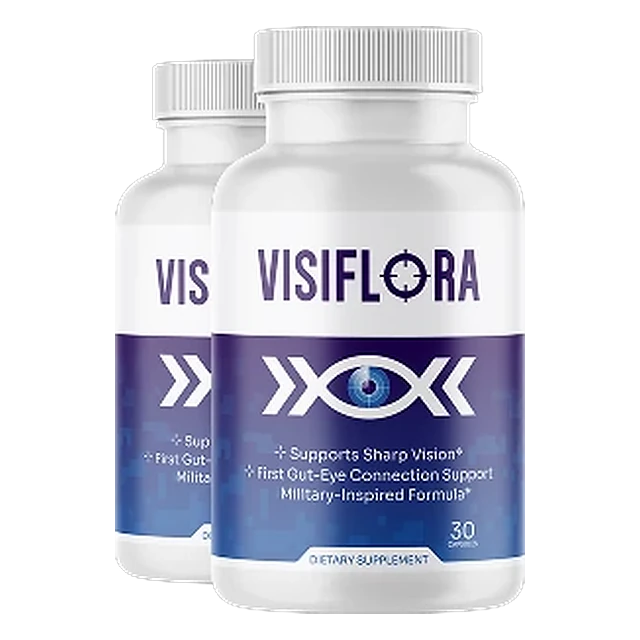
Checked 8 October 2026. Label and price figures checked 8 October 2026. Every source is named below, so you can repeat each check yourself.
No study of VisiFlora, and what the ingredient trials measured
The Europe PMC result, the dose gap and the 23%
No study has tested VisiFlora itself. Vitamin C, vitamin E, zinc and copper sit at 100% of the Daily Value on usaloves.com's panel. AREDS used far higher doses. The seller's 23% came from 11 healthy volunteers.
We searched Europe PMC for "VisiFlora" on 8 October 2026, and it returned zero records. So nobody has published a trial of the finished capsule, or measured what one capsule does to vision.
The seller doesn't claim otherwise, and Bing's AI answer says the same thing. That's normal for this category, and we don't count it against the seller.
The fairer question is what the research behind each claim actually measured, and in whom. We take the claims in order of how much they matter to a buyer, starting with the dose.
Do the doses on usaloves.com's panel match AREDS?
Four numbers, each at exactly 100% of the Daily Value
The seller publishes no Supplement Facts panel anywhere we looked. We checked the sales page, all six help pages and the image directory, and found nothing.
The only published copy we found is on usaloves.com. It says the panel was supplied to it and checked on 29 July 2026. Every label figure below comes from that page, not from the seller.
That panel lists four nutrients that AREDS also tested. Per capsule it gives vitamin C at 90 mg and vitamin E at 15 mg. It gives zinc at 11 mg and copper at 0.9 mg. Each is 100% of the Daily Value.
| Nutrient | AREDS daily dose | VisiFlora per capsule, per usaloves.com | Daily Value on that panel |
|---|---|---|---|
| Vitamin C | 500 mg | 90 mg | 100% |
| Vitamin E | 400 IU | 15 mg | 100% |
| Zinc | 80 mg | 11 mg | 100% |
| Copper | 2 mg | 0.9 mg | 100% |
AREDS gave these amounts daily to 3,640 people aged 55 to 80, for an average of 6.3 years. The paper's own title calls the regimen "high-dose supplementation", because high doses were the hypothesis under test.
Vitamin C in the trial was more than five times the panel amount. Zinc was more than seven times, and copper was more than double.
Vitamin E is quoted in IU for AREDS and milligrams for VisiFlora, so we won't convert it. The panel amount is a daily value, and the AREDS amount is far above one.
The trial's result belongs to those doses and to nothing lower. Antioxidants plus zinc, set against placebo, gave an odds ratio of 0.72 for progression to advanced AMD.
So the fair reading is a simple one. On this panel, VisiFlora is a daily-value eye multivitamin, which is a reasonable thing to be. It isn't the AREDS formula, though it's sold in the language of that trial.
One point in its favour. AREDS added 2 mg of copper because its zinc dose was 80 mg. At 11 mg of zinc, that depletion concern doesn't arise in the same way, and we credit that.
Now the counterweight, which matters. AREDS2 used lutein at 10 mg and zeaxanthin at 2 mg (PMID 23644932), so 12 mg together.
That would fit inside a 351 mg blend, and we aren't saying it's missing. The usaloves.com panel lists lutein from marigold and zeaxanthin among the fourteen blend ingredients. The label just doesn't say how much of either.
Here's the pattern, and nobody else we found has pointed it out. The four disclosed AREDS nutrients are the four that sit furthest from the trial. The two that could match are the two left inside the blend.
Matching those two amounts wouldn't settle much on its own. AREDS2 enrolled 4,203 people aged 50 to 85 with large drusen. Its primary analyses found "no statistically significant reduction" in progression to advanced AMD.
Beta carotene. The panel lists vitamin A as beta carotene, at 450 micrograms RAE. AREDS2 recorded more lung cancers in the beta carotene group, 23 against 11, mostly in former smokers.
The AREDS formula carried 15 mg. The VisiFlora amount is far smaller, so the signal doesn't carry over directly. The sales page never mentions smoking, and the side effects page covers the detail.
Where does VisiFlora's 23% blood flow claim come from?
The number is real, and everything around it has changed
The sales page says ginkgo and Coleus forskohlii "Help Improve Blood Flow To The Retina By 23%, Enhancing Nutrient Delivery And Visual Sharpness". It gives no author, journal, year or identifier for the figure.
We traced it to PMID 10385132, published in 1999 in the Journal of Ocular Pharmacology and Therapeutics. Its title is "Ginkgo biloba extract increases ocular blood flow velocity."
| Detail | The sales page says | The study measured |
|---|---|---|
| What was measured | Blood flow to the retina | End diastolic velocity in the ophthalmic artery, 6.5 to 7.7 cm/sec |
| Ingredient | Ginkgo and Coleus forskohlii | Ginkgo extract alone, with no Coleus forskohlii in the study |
| The number | 23% | 23%, correctly quoted, p 0.023 |
| Who | Not stated | 11 healthy volunteers, average age 34 |
| How long | Not stated | Two days of treatment |
| Dose | One capsule a day, ginkgo amount unpublished | 120 mg a day, as three 40 mg doses |
| Vision outcome | "Visual Sharpness" | No vision outcome measured |
The 23% is correctly transcribed, and everything around it has been changed. An artery upstream of the eye isn't the retina, and a velocity isn't a vision score.
On placebo the change in the study was 3%. The authors concluded the extract "deserves further investigation". They had glaucomatous optic neuropathy in mind, not a daily capsule for sharper sight.
One fair note on dose. The study used 120 mg a day, and 120 mg would physically fit in a 351 mg blend. The panel gives no ginkgo amount, so you've no way to check.
The other claims, one at a time
Bilberry, saffron, astaxanthin, eyebright and two empty searches
Bilberry. The page says it was "Used By WWII Pilots For Clearer Night Vision And Retinal Strength". The best review we found is PMID 14711439, from Survey of Ophthalmology in 2004.
It identified 30 trials with outcomes relevant to vision in reduced light, and twelve were placebo-controlled. The four most recent were randomised and all negative.
The authors link negative outcomes to more rigorous methods. Eleven of the twelve tested people with normal or above average eyesight.
They did leave a door open for further work. Weaker evidence "may warrant further trials ... in subjects with impaired night vision." Both halves are true, then. Better trials found nothing in healthy eyes, and people whose night vision is already poor weren't ruled out.
Saffron. The page says "Clinically Shown To Help Support Visual Acuity And Eye Health". This one has a real randomised trial behind it, and we say so plainly.
PMID 30343354 appeared in Graefe's Archive in 2019. It was a randomised, double-blinded, placebo-controlled crossover trial in 100 adults over 50 with mild to moderate AMD.
They took 20 mg of saffron a day for three months. Best-corrected visual acuity improved by 0.69 letters, which is less than one letter on an eye chart.
The authors call the gain "modest", and we use their word. The people had AMD, the dose was saffron alone, and VisiFlora's saffron amount is unpublished. The trial found no significant difference in adverse events.
Astaxanthin. PMID 40014233 appeared in Advances in Therapy in 2025. It was randomised, double-blind and placebo-controlled, and it ran for 84 days.
It enrolled 64 children aged 10 to 14 with screen strain. Their questionnaire scores improved by 4.00 points from baseline. That's a real result, in a different group from the page's "former pilots, veterans, and thousands of vision-conscious customers".
The empty searches. The page calls astaxanthin "A NASA-Researched Antioxidant 6,000x Stronger Than Vitamin C". We searched Europe PMC and found no source for either claim.
That's an empty search, not a verdict, and we aren't calling the claims false. The sales page gives no source for them either.
Eyebright. The page says it was "Used For Over 2,000 Years To Support Healthy Optic Nerve Function". Europe PMC returned 279 records for the plant. We found no randomised human trial of oral eyebright for any vision outcome.
The closest on-topic paper is a history of 19th-century folk medicine (PMID 37667609). The page uses a claim about tradition as a claim about effect.
Is the gut-eye idea behind VisiFlora real science?
Credit where it's due, and what's still missing
The seller's central idea isn't invented. The gut-retina axis is an active research field. The page's LPS language has a real literature behind it, and we credit that.
PMID 42560008 appeared in Investigative Ophthalmology & Visual Science in 2026. Its title is "Exploring Endotoxemia in Age-Related Macular Degeneration, Glaucoma, and Diabetic Retinopathy." Endotoxin is LPS, the molecule the page says it sweeps from your retina.
PMID 42713337 appeared in Frontiers in Immunology in 2026. Its title is "The gut-retina axis in diabetic retinopathy: a new paradigm for pathogenesis and therapeutic intervention."
Taurine fits the same story, since it's concentrated in retinal tissue. The page says it was "Shown To Reduce LPS Production And Support Hydration In Retinal Cells". We found no human trial of oral taurine lowering LPS or improving vision in healthy adults.
That's the gap we can't close. We found no trial showing that swallowing these twenty-one ingredients lowers LPS or improves vision. The mechanism is being studied, but the capsule hasn't been.
One more plain observation. The usaloves.com panel lists no probiotic organism, strain, CFU count or named prebiotic. A product built on the gut carries none of them on that panel.
So does VisiFlora work?
What we can say, and what we can't
Here's what we can say, and it's a fair amount. The gut-eye idea is real research, and saffron, astaxanthin, lutein and zeaxanthin each have genuine trials behind them. The seller doesn't claim a trial of the finished product.
Here's what we can't say. We can't say one capsule carries a studied amount of any blend ingredient. The blend gives no amounts to check against. The vitamins and minerals sit at daily values, not AREDS doses.
That's why VisiFlora scores 3 out of 10 in our full review. Only EndoPeak, at 5, scores higher.
The seller earns that credit. The page has no countdown timer and no customer counter, and it carries one sentence of urgency. Its footer also discloses that the testimonial names are changed.
It also publishes a 22-item reference list at /help/references. Three of the 22 are commercial pages rather than research.
For a panel with every amount printed, Walmart.com listed PreserVision AREDS 2 on 8 October 2026. It cost $34.47 for 120 softgels, which is 60 days at two a day.
Nothing here treats or prevents macular degeneration, glaucoma or cataracts. If an eye doctor prescribed an AREDS formula, follow that instead of substituting this.
Sudden vision loss, eye pain, flashes, new floaters or a shadow across your sight need a doctor today. Ginkgo and vitamin E raise bleeding questions, so ask first if you take blood thinners.
Ask again if you have surgery booked. The panel says it isn't for people under 18, or for pregnant or nursing mothers.
Questions about whether it works
Short answers, each traceable to something above
Is there a clinical study of VisiFlora?
No. Europe PMC returned zero records for "VisiFlora" on 8 October 2026, and the seller doesn't claim a trial of the finished product.
Where does the 23% blood flow figure come from?
PMID 10385132, a 1999 study of 11 healthy volunteers. They took 120 mg of ginkgo extract a day for two days. The study measured artery velocity, not any vision outcome.
Does VisiFlora match the AREDS doses?
Not on the panel usaloves.com published. Vitamin C is 90 mg against the 500 mg AREDS used. Zinc is 11 mg against 80 mg, and copper is 0.9 mg against 2 mg.
Does the saffron trial support the claim?
In part. It was a real randomised trial in 100 adults with AMD, at 20 mg a day. The authors themselves call the 0.69 letter gain modest.
Is there proof that eyebright helps vision?
We found none. Europe PMC returned no randomised human trial of oral eyebright for any vision outcome, only a folk-medicine history.
For the full label and the ingredient count, read the ingredients page. The interaction questions are on the side effects page.
usaloves.com published the panel and reached 21 ingredients against the seller's 22 before we did. We agree with that count, and we checked it.
This page is desk analysis, and we haven't tested VisiFlora. We read the seller's pages and queried Europe PMC on 8 October 2026. If something changes, tell us through the contact page and we'll add a dated correction.
That link goes to the seller's own site. We earn a commission if you buy, at no extra cost to you, and it never changes what we write. Our full review has the score and the verdict.
This page is information, not medical advice. Statements about supplements have not been evaluated by the FDA.