Does SugarReset Work? What the Trials Used Against What the Bottle Declares
Five trials, five doses. Every one of them is bigger than the entire blend.
Checked 10 October 2026. Label and price figures checked 10 October 2026. Every source is named below, so you can repeat each check yourself.
What the trials used against SugarReset's bottle
The dose gap, the 200 mg blend and the chromium figure
The seller cites no study of SugarReset. Every trial dose for the ingredients it names is larger than the whole 200 mg blend. Chromium is declared at 0.7 mcg, against 200 to 1,000 mcg in the trial.
We didn't test SugarReset. We read what the seller publishes, then read the trials behind the ingredients it names. We checked both on 10 October 2026.
The sales page headline promises "The Easiest Way to Manage Type 2 for a Healthier, More Energetic Life". That's a big promise, so it deserves a close look at the research.
The fair question isn't whether chromium or green tea has ever been studied. They have. The question is whether the trials used anything like the amounts in this bottle. We start with the doses.
Do SugarReset's doses match the trials?
Five trials, five doses, and one 200 mg blend
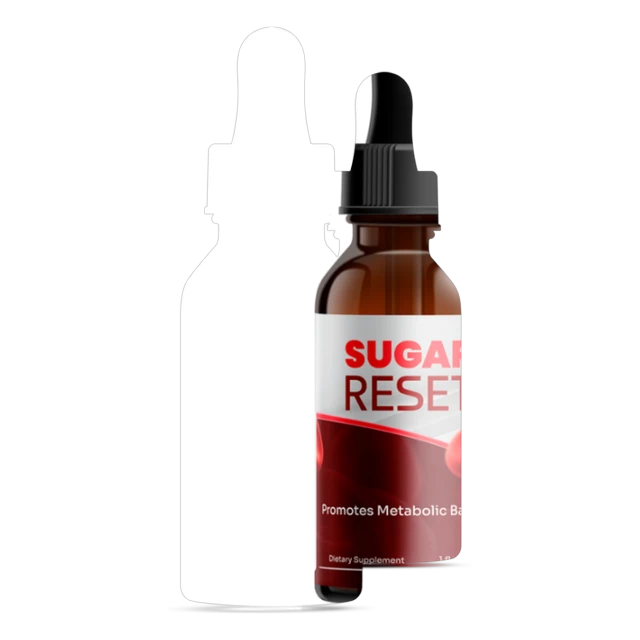
The label gives two amounts. Chromium is 0.7 mcg, and the blend is 200 mg. The other twenty-two ingredients sit inside that blend with no amounts.
The sales copy repeats none of these figures. The label appears only as artwork near the foot of the page, so most buyers never see it.
We took the five named ingredients that have a trial behind them. The table sets each trial dose beside what the label declares.
| Ingredient | Trial dose a day | SugarReset label | PMID |
|---|---|---|---|
| Chromium picolinate | 200 to 1,000 mcg | 0.7 mcg | 9356027 |
| Gymnema | 400 mg | Whole blend is 200 mg | 2259217 |
| African mango | 300 mg | Whole blend is 200 mg | 19254366 |
| Green tea | 615 mg of catechins | Whole blend is 200 mg | 25230741 |
| Ginseng | 3 g of American ginseng extract | Whole blend is 200 mg | 29478187 |
Look at the last four rows. Gymnema at 400 mg is twice the entire blend. African mango at 300 mg is more than the entire blend.
Green tea catechins at 615 mg are three times the entire blend. The ginseng dose is fifteen times it.
Those are the trial doses of single ingredients. The label has to fit all twenty-two into 200 mg.
We aren't saying a product must match a trial to work. We're saying the trials can't speak for this bottle, because the amounts aren't published to compare.
A 200 mg blend, split twenty-two ways
What an even split would leave for each ingredient
The label lists twenty-two ingredients inside one proprietary blend of 200 mg. It doesn't say how much of each. Split evenly, each would get about 9.1 mg.
A real blend wouldn't split evenly, and we don't know the true split. But the sum stays the same. All twenty-two share 200 mg, and no single one can have all of it.
Here's a fair caveat. The directions say to take 1 or 2 droppers full daily. If a dropper is the 1 ml serving, two droppers double the blend.
Even doubled, green tea and ginseng stay above it. Gymnema's trial dose would only be matched if the doubled blend were nothing but gymnema.
The seller's own supply claims depend on the lower dose. The price page covers that arithmetic.
How big is the chromium gap, really?
0.7 mcg on the label, 200 to 1,000 mcg in the trial
Chromium is the one nutrient the label declares on its own. It's listed as chromium picolinate at 0.7 mcg, which is 2% of the Daily Value.
The seller calls chromium a key that helps insulin enter your cells. The trial behind that idea is PMID 9356027, published in Diabetes in 1997.
It randomized 180 adults treated for type 2 diabetes. They got placebo, 200 mcg a day or 1,000 mcg a day, for four months.
| Detail | SugarReset label | Trial low arm | Trial high arm |
|---|---|---|---|
| Form | Chromium picolinate | Chromium picolinate | Chromium picolinate |
| Amount | 0.7 mcg | 200 mcg a day | 1,000 mcg a day |
| Times the label amount | Not applicable | About 286 times | About 1,429 times |
The seller's idea isn't invented. The trial is real, and its results were good. HbA1c improved at two months on 1,000 mcg, and in both chromium arms by four months.
But those results belong to those doses. The label amount is about 286 times smaller than the low arm. It's about 1,429 times smaller than the high arm.
Two sites reached the 0.7 mcg figure before us. nohypewellness.com and health-product-review.com both published it, along with the 200 mg blend. We checked it against the label artwork, and we agree.
One point in the label's favor. 0.7 mcg is a real amount of a real nutrient. It just isn't the amount any trial used.
For comparison, NOW Foods Chromium Picolinate prints 200 mcg per capsule, at 571% of the Daily Value. The source is 1,835 mcg of chromium picolinate. It cost $8.99 for 100 capsules on 10 October 2026, nine cents a day.
That's the trial's low-arm dose, printed in full. We're comparing printed amounts, not recommending it for anyone's blood sugar.
Green tea's honest effect is about 1.44 mg/dL
The counterweight, and it cuts both ways
Now the counterweight, which matters. Green tea is the one ingredient here with a pooled analysis behind it, and the effect is small.
PMID 32670385 is a 2020 systematic review and meta-analysis in Nutrition and Metabolism. It pooled green tea trials and found fasting blood glucose fell by 1.44 mg/dL. The 95% interval runs from 0.62 to 2.26.
So the effect is real in the pooled data, and it's small. About one and a half mg/dL is a tiny move, even at proper catechin doses.
The 615 mg trial is PMID 25230741, from the British Journal of Nutrition in 2014. It ran four weeks. A catechin-rich green tea beverage went against a low-catechin placebo, and postprandial glucose and insulin improved.
This cuts both ways. The best-studied ingredient on the label has a modest effect at full doses. And the blend can hold no more than 200 mg of anything, green tea included.
The seller's other claims, one at a time
Gymnema, African mango, ginseng and maca
Gymnema. The seller calls it the sugar destroyer and says it helps regenerate pancreatic cells. The trial is PMID 2259217, from the Journal of Ethnopharmacology in 1990.
It added GS4 leaf extract to conventional oral drugs in type 2 diabetes. The dose was 400 mg a day, for 18 to 20 months. Blood glucose and HbA1c fell.
That's a real result. It's a different thing from the seller's regeneration claim, which cites no source. The trial dose is also twice the entire 200 mg blend.
African mango. The seller says it acts on leptin and helps the body process fats and sugars. PMID 19254366 appeared in Lipids in Health and Disease in 2009.
It was double-blind, in overweight and obese volunteers, over ten weeks. They took 150 mg twice daily, before meals. Weight, waist and several blood markers improved against placebo.
Those volunteers were overweight, not selected for type 2 diabetes. The 300 mg a day is also more than the whole blend.
Ginseng. The seller calls it an ancient root that improves glucose uptake by muscle cells. The label says Panax Ginseng Aerial Extract. Aerial parts are leaves and stems.
PMID 29478187 appeared in the European Journal of Nutrition in 2019. It was a double-blind cross-over in type 2 diabetes, over eight weeks, using American ginseng root.
Dosing was 1 g per meal, 3 g a day. Glycemic control improved, along with some cardiovascular risk markers. That's root, not aerial extract, at fifteen times the whole blend.
Maca. The seller credits it with balancing hormones and the stress response. We searched Europe PMC on 10 October 2026 for a randomized trial of maca with a blood-sugar outcome. It returned none.
That's an empty search, not a verdict. We aren't calling the claim false. The sales page gives no source for it either.
What sits under the Scientific References heading?
Nothing, and that shapes how to read every claim above
The seller's footer carries a Scientific References heading. Under it, there's nothing. No PubMed link, no journal and no study.
So every trial above is one we traced ourselves. The seller hasn't told you which study backs which claim, and we may have picked different ones.
The page also pulls two ways. Its disclaimer says the product "is not intended to diagnose, treat, cure, or prevent any disease". Its headline promises the easiest way to manage type 2.
We can't settle that tension for you. We can say the page offers no reference for either side of it.
So does SugarReset work?
What we can say, and what we can't
Here's what we can say. Chromium, gymnema, African mango, green tea and ginseng each have real trials. Some show real effects, in the people studied, at the doses used.
Here's what we can't say. We can't say a dose of SugarReset carries a studied amount of any of them. Chromium is declared at 0.7 mcg, and the blend gives no per-ingredient amounts.
That's why SugarReset scores 2 out of 10 in our full review. Its dosing earns no points at all.
The seller earns some credit. It does publish the label, with all twenty-three ingredients, the 1 ml serving and 30 servings a bottle.
For a label with every amount printed, look at Thorne Berberine. It lists 450 mg berberine HCl plus 550 mg berberine phytosome per serving. It cost $1.32 a day on 10 October 2026. We're comparing label honesty, not effects.
Blood sugar is a medical matter. Talk to your doctor before adding anything, and never change a prescribed medicine on your own.
Questions about whether SugarReset works
Short answers, each traceable to something above
Is there a clinical study of SugarReset?
The seller cites none. Its Scientific References heading has nothing under it, and it names no trial of the finished product.
How much chromium is in SugarReset?
The label declares 0.7 mcg, or 2% of the Daily Value. The trial behind the claim used 200 to 1,000 mcg a day.
Are the trial doses bigger than the SugarReset blend?
Yes, for the named ingredients. Each trial dose exceeds the whole 200 mg blend. That covers gymnema at 400 mg and African mango at 300 mg. It also covers green tea at 615 mg and ginseng at 3 g.
Does green tea lower blood sugar?
Slightly. PMID 32670385 pooled trials and found fasting glucose fell by about 1.44 mg/dL.
Is there proof that maca helps blood sugar?
We found none. Europe PMC returned no randomized blood-sugar trial of maca on 10 October 2026.
For the full label and the ingredient count, read the ingredients page. The warnings are on the side effects page. The real cost per day is on the price page.
Look-alike domains and the guarantee have their own pages: is it a scam and complaints.
nohypewellness.com and health-product-review.com published the 0.7 mcg chromium figure and the 200 mg blend before we did. nohypewellness.com also published the twenty-three count and spotted the aerial versus root problem. We checked each against the label artwork, and we agree.
This page is desk analysis, and we haven't tested SugarReset. We read the seller's pages and queried Europe PMC on 10 October 2026. If something changes, tell us through the contact page and we'll add a dated correction.
That link goes to the seller's own site. We earn a commission if you buy, at no extra cost to you, and it never changes what we write. Our full review has the score and the verdict.
This page is information, not medical advice. Statements about supplements have not been evaluated by the FDA.