Does CelluCare Work? Real Trials on the Plants, No Trial on the Product
One Europe PMC record matches the name, and it is a cosmetic injection study. The plants themselves have a far better record than that.
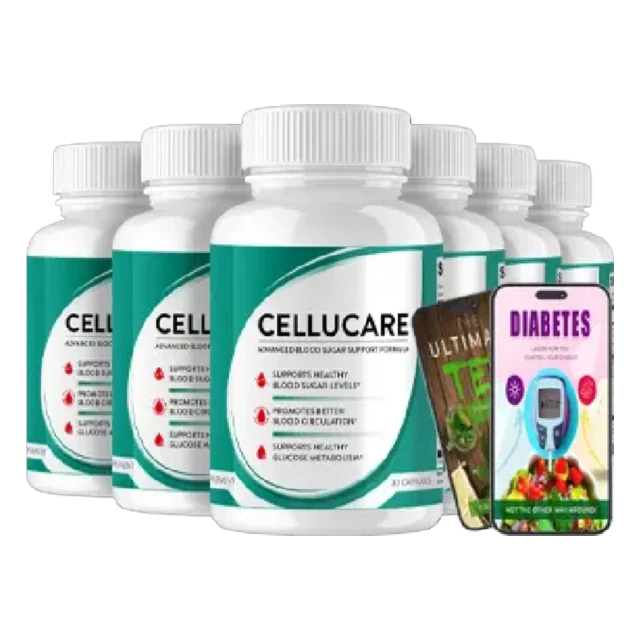
Checked 29 September 2026. Label and price figures checked 29 September 2026. Every source is named below, so you can repeat each check yourself.
Is there any trial on CelluCare itself?
What the published record holds on CelluCare itself
Does CelluCare work? No published study of CelluCare exists. The plants in the formula have real human trials, including a strong curcumin result. The seller publishes no dose for any ingredient, so nobody can confirm a studied amount.
We searched Europe PMC on 29 September 2026 for "cellucare". One record matched.
It's a 2011 paper in the Journal of Cosmetic and Laser Therapy. Its title is "Evaluation of mesotherapeutic injections of three different combinations of lipolytic agents for body contouring".
That paper concerns an injectable cosmetic treatment that shares the name. It isn't this supplement.
So the position is precise. The string matches once, and the match is a different product. There's no published study of this capsule.
That answers the head question. Nobody has published a trial showing CelluCare works. Nobody has published one showing it doesn't.
It isn't the end of the story, though. The plants inside are a different matter.
What evidence do the plants have?
Real human evidence, and one strong trial
The seller names eight ingredients. We counted randomized controlled trial records for each on Europe PMC. The counts measure research on the plant, not on this product.
Turmeric has 1,201 records. Cocoa has 659. Pine bark has 99. Eleuthero has 36, juniper 23, gymnema 17, banaba 11 and butcher's broom 4.
That's a better-evidenced list than the last blood-sugar formula we reviewed. For cocoa we hold the count only, so we make no claim about what those trials found.
Eleuthero, juniper, gymnema, banaba and butcher's broom have far fewer trials. A small count doesn't mean a plant fails. It means there's less to go on. Butcher's broom has the thinnest base of the eight.
Curcumin, Chuengsamarn et al., Diabetes Care, 2012. This was a randomized, double-blinded, placebo-controlled trial (PMID 22773702). It enrolled 240 people with prediabetes and treated them for 9 months.
The result, in the authors' words: "After 9 months of treatment, 16.4% of subjects in the placebo group were diagnosed with T2DM, whereas none were diagnosed with T2DM in the curcumin-treated group."
Their conclusion: "A 9-month curcumin intervention in a prediabetic population significantly lowered the number of prediabetic individuals who eventually developed T2DM ... with very minor adverse effects."
Beta-cell function was also better in the curcumin group.
That's a strong result, and it should read as one. The design was double-blind and placebo-controlled. The gap was 16.4% against none.
It's still a result for curcumin. It applies to the dose that trial used, over nine months, in people with prediabetes. It isn't a result for CelluCare.
We can't say whether this capsule holds that dose. The seller doesn't publish one.
Three questions for any trial
When a result carries over to a product, and when it doesn't
A good trial is still a trial of something specific. Before you carry a result to a product, ask three questions.
Is it the same ingredient? The trial tested curcumin. The seller's list says "Turmeric Rhizome" and gives no strength.
Is it the same dose? The seller publishes none, so nobody can check.
Are they the same people and timeframe? The curcumin trial enrolled people with prediabetes and ran for 9 months. The pine bark trial measured the glucose peak after 75 g of sucrose.
A result carries over when all three match. The seller's page gives you no way to confirm the dose, and that alone breaks the chain.
What the pine bark dose trial found
The lower dose worked and the higher one didn't
Pine bark extract, Nutrients, 2025. The trial gave 75 g of sucrose with a control, 50 mg or 400 mg of extract. The extract was New Zealand pine bark (PMID 40732901).
The result, in the authors' words: "Compared to control (9.1 mmol/L), glucose peak value was significantly reduced with the 50 mg dose (8.6 mmol/L, 5.5% reduction, p 0.016) but not with the 400 mg dose (8.7 mmol/L, 4.4% reduction, p 0.093). There were no statistically significant changes in postprandial insulin levels."
| Group | Glucose peak | Reduction | p value | Significant |
|---|---|---|---|---|
| Control | 9.1 mmol/L | Not applicable | Not applicable | Not applicable |
| 50 mg | 8.6 mmol/L | 5.5% | 0.016 | Yes |
| 400 mg | 8.7 mmol/L | 4.4% | 0.093 | No |
The lower dose worked. The higher one didn't. More wasn't better.
Keep it in proportion. This is one trial, one measure and one extract. The two reductions are close, 5.5% and 4.4%.
What it shows is that 400 mg missed the significance bar while 50 mg cleared it. It doesn't show that 400 mg does harm.
The trial also measured a glucose peak. The seller's claim for pine bark is "Reduces inflammation". The two aren't the same thing.
Why an unknown amount cuts both ways
A low amount and a high amount are both unproven
The seller publishes no Supplement Facts panel. It gives no amount for any of the eight named ingredients. It says "Over 12", so at least four more are never named.
Say the capsule holds less pine bark than the studied dose. Then you can't assume a benefit.
Say it holds more. You still can't assume one, because 400 mg did worse than 50 mg in that trial.
Some readers think "I don't know the amount, but more is probably fine". This trial gives that thought no support. For this ingredient, more performed worse.
The same logic runs for every ingredient. A trial result belongs to the dose the trial used. Without a label, you can't tell whether CelluCare matches that dose, undershoots it or overshoots it.
We can't say the amounts are wrong. We can only say nobody outside the maker knows them. The ingredients page lists all eight, and the four-plus that aren't named.
What the CelluCare page offers instead of a study
Testimonials, a rating and an unnamed doctor
The page says "Our customers say 4.98/5 based on 2000+ reviews". It names no review platform and links no source.
Three testimonials come from Michael S. of North Carolina, John M. of Arizona and Emily R. of Texas. Each is labeled "Verified Purchase". The page shows no way to verify them.
The headline quotes a "Leading Doctor" saying "Activate these cells for stable blood sugar". No doctor is named anywhere on the page.
The claims are restrained. The page says CelluCare is "designed to assist in maintaining healthy blood sugar levels". It doesn't say it cures diabetes. That's a real difference from the last blood-sugar product we scored.
One line reaches further. It says the formula "helps naturally awaken the feedback loop responsible for the blood sugar and healing and regenerative potential that's lying dormant within you". That line describes the product, and no study of the product exists.
The seller also offers a 60-day money-back guarantee, minus shipping and handling. A refund promise isn't evidence. The price page covers the terms.
What we would need to see from the seller
Two documents would settle most of this
First, a published trial of CelluCare itself. Second, a Supplement Facts panel with an amount for each ingredient.
The panel is the easier ask. It would let you set the curcumin and pine bark amounts beside the trials above. It would also show the four-plus ingredients the seller never names.
Even a matching dose wouldn't prove the formula works. Eight ingredients together aren't the same as any one alone. But it would give you something to check.
Until then, the honest answer holds. The plants have evidence. The product doesn't.
Where does that leave CelluCare?
Real plants, no product trial, unknown amounts
The plants have real evidence. The product has none. The dose is unknowable.
That's why CelluCare scores 1 out of 10 in our full review. That ties Gluco Cleanse Tea, the last blood-sugar product we scored. The tea claimed to fix type 2 diabetes and published no label. CelluCare's claims are quieter, but its label hides every amount.
Several of the named botanicals are studied for lowering blood glucose. If you take insulin, metformin, a sulfonylurea or a GLP-1 agonist, ask your prescriber first. Don't change a prescribed dose on your own. The side effects page goes further.
Common questions about whether CelluCare works
Short answers, each traceable to something above
Is there a clinical study of CelluCare?
No. Europe PMC returns one record for "cellucare". It's a 2011 paper on cosmetic injections for body contouring, a different product with the same name.
Do CelluCare's ingredients have research behind them?
Yes. Europe PMC lists 1,201 randomized trials on turmeric, 659 on cocoa and 99 on pine bark. Those trials studied the plants, not this product.
What did the curcumin trial find?
In 240 people with prediabetes over 9 months, 16.4% on placebo developed type 2 diabetes. None on curcumin did. It's a result for curcumin, not for CelluCare.
Is a higher dose of pine bark better?
Not in the trial we found. A 50 mg dose lowered the glucose peak significantly, at p 0.016. A 400 mg dose didn't, at p 0.093.
How much of each ingredient is in CelluCare?
Nobody outside the maker knows. The seller publishes no Supplement Facts panel and no amount for any ingredient.
This page is desk analysis. We haven't tested CelluCare. We read the seller's page and queried Europe PMC on 29 September 2026. If something changes, tell us through the contact page and we'll add a dated correction.
That link goes to the seller's own site. We earn a commission if you buy, at no extra cost to you, and it never changes what we write. Our full review has the score and the verdict.
This page is information, not medical advice. Statements about supplements have not been evaluated by the FDA.