CelluCare Side Effects: What Nobody Has Written About It and Your Diabetes Medication
Search for this product alongside metformin and Bing returns nothing about it at all. For a blood-sugar supplement, that gap is worth filling.
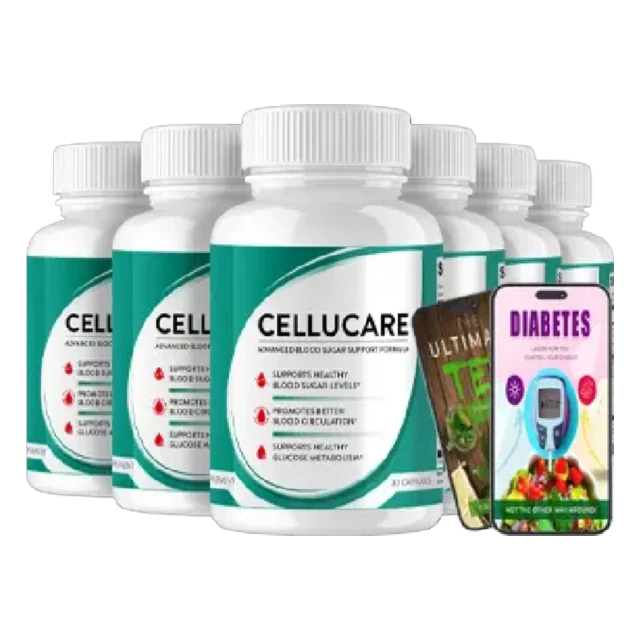
Checked 29 September 2026. Label and price figures checked 29 September 2026. Every source is named below, so you can repeat each check yourself.
Can CelluCare interact with blood sugar medicine?
What glucose-lowering botanicals could do alongside a prescription
CelluCare is sold for blood sugar, and several of its named botanicals are studied for lowering glucose. Taken with insulin, metformin, a sulfonylurea or a GLP-1 agonist, the effects can stack. The seller publishes no amounts.
On 29 September 2026 we searched Bing for "cellucare side effects metformin insulin interaction". It returned 7,330 results. Not one was about CelluCare.
Bing fell back on generic pages. Drugs.com on metformin with insulin, WebMD's interaction checker, GoodRx and Mayo Clinic all appeared. Its own summary answered a different question, about metformin and insulin. Nothing in its index links this product to the question.
This page makes that link. It's desk analysis. We haven't tested CelluCare, and no interaction study of it exists.
We searched Europe PMC for the name and found one record. It's a 2011 paper on injectable cosmetic treatments, a different product with the same name.
Why the effects can stack
The product's job and the drugs' job are the same
The seller sells CelluCare for blood sugar. Its page says the formula is "designed to assist in maintaining healthy blood sugar levels". That's the job it's sold to do.
Several named ingredients carry a blood sugar claim or a glucose trial. The seller says turmeric "Supports blood sugar levels" and gymnema "Supports healthy heart & blood sugar".
In the pine bark trial (PMID 40732901), 50 mg lowered the glucose peak after sucrose. The result was significant, at p 0.016.
The curcumin trial (PMID 22773702) ran in 240 people with prediabetes. Over 9 months, none of the curcumin group were diagnosed with type 2 diabetes. In the placebo group, 16.4% were.
Insulin, metformin, sulfonylureas and GLP-1 agonists also lower glucose. Add a second thing that lowers it, and the two effects can add up. That's the stacking worry.
It's a reasoned concern, not a documented one. Nobody has published a study of CelluCare beside these drugs.
The seller expects buyers who already manage diabetes. Free Bonus #1 with the three and six-bottle packs is titled "Learn How to Manage Type 2 Diabetes".
What low blood sugar feels like
Signs worth knowing before you add anything
Low blood sugar is called hypoglycemia. The early signs are easy to blame on something else.
Early signs. You may feel shaky or sweaty. Hunger can hit suddenly. Your heart may pound. Some people get a headache, feel dizzy or turn anxious and irritable. Vision can blur.
Later signs. Thinking gets muddy. Speech can slur. You may feel very drowsy or struggle to finish a sentence. Without treatment, a low can end in fainting or a seizure.
Some people get little warning at all. Others confuse a low with stress, a skipped meal or a bad night's sleep.
A new supplement adds a new suspect. If these signs start after you begin CelluCare, tell your prescriber what you added and when. Don't wait for it to pass.
Follow the low blood sugar plan your care team gave you. Someone who is confused, can't swallow safely or has passed out needs emergency help. Call your local emergency number.
We don't give numeric blood glucose thresholds here. Our research files hold none, and yours should come from your own care team.
Can anyone predict how strong the effect is?
No amounts published, and more isn't reliably stronger
Whether stacking matters depends on dose. CelluCare publishes no Supplement Facts panel and no amount for any ingredient. Its page says "Over 12" and names eight.
You can't look up a milligram figure and weigh it. Neither can your doctor or pharmacist. The ingredients page lists what the seller does name.
A bigger amount isn't reliably a stronger one. In the pine bark trial, the 50 mg dose lowered the glucose peak significantly (p 0.016). The 400 mg dose didn't (p 0.093).
The trial also found no statistically significant change in postprandial insulin. It doesn't show that 400 mg is safe or unsafe. It shows that 400 mg missed significance on that measure.
So the dose-response wasn't a straight line for one named ingredient. A smaller amount worked and a larger one didn't. That's an odd shape, and you can't plan around it.
It undercuts two comforting guesses. One is "the amount must be tiny". The other is "more would only be stronger". Neither can be assumed.
Then there are the ingredients nobody names. At least four are missing from the page. The reference list cites berberine, olive leaf, bitter melon, guggul and phosphatidylserine.
We can't tell whether any of the five is in the bottle. Your prescriber can't check an ingredient that nobody names.
Does the juniper claim reach blood pressure too?
The seller's own claim reaches past blood sugar
The seller's claim for juniper berry is "Reduces blood pressure". Nothing else on the ingredient list makes a claim that direct.
If you take blood pressure medicine, that line matters to you. If the claim holds at the capsule's dose, it's another effect that could stack with your medicine.
We can't say how much juniper is in a capsule. So we can't say whether the claim holds at this dose, or how far it would go.
It's also a disease claim. It sits on a page whose FDA statement says the product isn't meant to treat any disease.
The page's FDA statement reads: "These statements have not been evaluated by the Food and Drug Administration. This product is not intended to diagnose, treat, cure or prevent any disease."
Read the two side by side. One line says the product reduces blood pressure. The other says it isn't meant to treat anything. A reader on blood pressure medicine deserves to know which line to trust.
The juniper line is one more reason the conversation below matters.
A caution one label carries and this page doesn't
Turmeric, read on two sellers' pages
We read the NOW Turmeric Curcumin label on nowfoods.com on 29 September 2026. It carries a caution about liver, gall bladder and gastrointestinal history.
That product is a single ingredient with a printed amount. Its maker still judged a caution was due.
Turmeric is the first ingredient CelluCare's page names. That caution doesn't appear anywhere on the CelluCare page.
We aren't saying CelluCare's turmeric carries the same risk. We can't, because the amount is unpublished. We're saying one seller warns a reader with that history and the other stays silent.
The curcumin trial reported "very minor adverse effects". That's reassuring for the dose and the people in that trial. It isn't a safety finding for this capsule.
What does CelluCare's safety record hold?
Less than you'd want, and that matters
We found no published safety study of CelluCare. We found no trial of it and no adverse event report.
That's an absence of data, not a clean bill of health. Nobody has looked, or nobody has published what they saw.
The seller's reference list does include a Juniperus safety assessment. A reference title isn't a finding about this product. It doesn't tell you what's in the capsule.
The formula is also assembled from eight named plants, at least four unnamed ingredients and unknown amounts. Even a well-studied plant behaves differently at a different dose, and alongside other plants.
Banaba shows the gap well. The one banaba reference on the seller's list is titled "Antioxidant effect of Lagerstroemia speciosa Pers (banaba) leaf extract in streptozotocin-induced diabetic mice". It's a mouse study.
Nothing on the page tells you what banaba does to glucose in a person. The page still lists banaba among the ingredients, so it's part of what you'd swallow.
The same goes for gymnema, eleuthero and butcher's broom. Each has human trials, but far fewer than turmeric or cocoa. Those trial counts sit on the does-it-work page.
What if you take diabetes or blood pressure medicine?
What to do before an order, not after
Several named botanicals are studied for lowering blood glucose. Do you take insulin, metformin, a sulfonylurea or a GLP-1 agonist? Talk to the doctor who prescribed it before adding CelluCare. Don't change a prescribed dose on your own. Don't stop a medicine because a supplement seems to help.
Bring the seller's page and the eight names. Say plainly that no amounts are published. Ask whether your doctor wants closer monitoring while you try it.
A pharmacist can also check a supplement against your list of medicines. Give the pharmacist the same eight names, and say that four or more ingredients are undisclosed.
Ask the seller for a real Supplement Facts panel first. Your prescriber can only judge what's on paper.
The refund exists if your doctor says no after you've ordered. It has conditions, though. The price page sets them out.
Common questions about CelluCare and medicine
Short answers, each traceable to something above
Can you take CelluCare with metformin or insulin?
Nobody has tested that combination. Several ingredients are studied for lowering glucose, and so are these drugs. Ask the prescriber before adding it.
Can CelluCare cause low blood sugar?
No study has measured that. It's a reasonable worry alongside diabetes medicine, because several ingredients are studied for lowering glucose.
Does CelluCare interact with blood pressure medicine?
The seller claims juniper berry "Reduces blood pressure". The amount is unpublished, so nobody can size any effect. Raise it with your prescriber.
Does CelluCare have side effects?
No published study of CelluCare reports any. That's not the same as none existing. The seller publishes no amounts and doesn't name at least four ingredients.
Is a higher dose of a botanical always stronger?
No. In the pine bark trial, 50 mg lowered the glucose peak significantly at p 0.016. The 400 mg dose didn't, at p 0.093.
For the trial evidence, read does CelluCare work. Our verdict and score are in the review.
This page is desk analysis. We haven't tested CelluCare. We read the seller's page, two Bing searches, Europe PMC and one NOW label on 29 September 2026. If something changes, tell us through the contact page and we'll add a dated correction.
That link goes to the seller's own site. We earn a commission if you buy, at no extra cost to you, and it never changes what we write. Our full review has the score and the verdict.
This page is information, not medical advice. Statements about supplements have not been evaluated by the FDA.