CelluCare Review: It Promises Over Twelve Ingredients, Names Eight, and Weighs None of Them
The claims here are restrained and the discount arithmetic is honest, which is rarer than it should be. Then you look for the ingredient amounts and there are none.
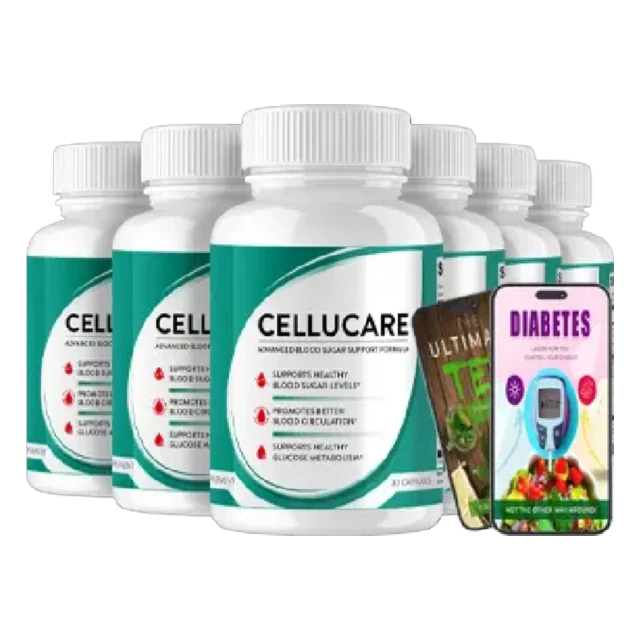
Checked 29 September 2026. Label and price figures checked 29 September 2026. Every source is named below, so you can repeat each check yourself.
What CelluCare gets right, and where it falls down
Every line below is checked against the seller's own pages, read 29 September 2026.
In its favour
- The claims stay restrained. We found no cure language.
- The discount arithmetic is correct on all three packs.
- BuyGoods is named as retailer of record, with a Delaware address.
- Seven references cover ingredients the page does name.
- Turmeric, cocoa and pine bark have deep human literatures.
Against it
- The page claims over 12 ingredients and names eight.
- There's no Supplement Facts panel, serving size or capsule count.
- Six references are about air pollution, dementia and other unrelated subjects.
- The refund needs the bottles back at your cost, minus shipping and handling.
- "Reduces blood pressure" is a disease claim on a page that denies treating disease.
CelluCare, checked against its own sales page
What the seller publishes, what holds up, and what is missing
CelluCare is a blood-sugar support capsule sold through BuyGoods. Packs run from $158 plus shipping for two bottles to $294 for six. The seller claims over 12 ingredients, names eight and publishes no amounts. We score it 1 out of 10. The claims are restrained, but the label never prints a single amount.
We landed on 1 out of 10. The claims are restrained, the subtractions are correct and a real company takes your card. Our scale pays little for those things. The label is the problem. The page names eight ingredients, hides at least four and gives no amount for any of them.
We read the rendered sales page in a browser, not a background fetch.
Every pack, price and shipping line, recorded as shown on 29 September 2026.
Every study came from a live Europe PMC query and is cited by PubMed ID.
We read every entry in the seller's reference list and sorted each by what it studies.
CelluCare scores 1 out of 10. The seller names eight of its claimed twelve ingredients and publishes no amounts. Packs cost $158 to $294, with a 60-day refund that deducts shipping and handling.
Disclosure: if you buy through a link on this page we may earn a commission. It costs you nothing extra. It doesn't change our score. We write the review before we check the commission.
What is CelluCare, and who sells it?
A capsule for blood-sugar support, sold by a named retailer
CelluCare is a capsule. The seller sells it in bottles and calls one bottle a 30-day supply.
The page says it's "designed to assist in maintaining healthy blood sugar levels and support weight management". We found no cure claim.
BuyGoods is the retailer of record. It's a Delaware company at 1201 N Orange Street, Wilmington. Your card is charged by BuyGoods, not by an anonymous storefront.
The page names a creator, "Thomas Wilson - Creator, CELLUCARE". It says the capsules are "assembled in the United States" and names no facility.
The page publishes no serving size and no capsule count. The 30-day figure is the seller's word, and there's no label to check it against.
What CelluCare gets right
We looked for reasons to credit this product and found some
Most products we check fail on the basics. This one passes several, and we'd be unfair to skip them.
The claims are restrained. The page says the formula "helps support your blood sugar goals". It says "supports" and "designed to assist". Nothing on it says the capsule fixes, cures or reverses diabetes.
The discount sums are correct. The seller crosses out a price and shows a saving. We checked each subtraction. Every one is right. It's the first seller in this category whose arithmetic we could sign off.
| Crossed-out total | Real total | Page says you save | Our subtraction | |
|---|---|---|---|---|
| 2 bottles | $358 | $158 | $200 | $200 |
| 3 bottles | $537 | $207 | $330 | $330 |
| 6 bottles | $1074 | $294 | $780 | $780 |
One caution keeps this honest. Every crossed-out total implies a $179 bottle. No pack is sold at $179, and the page never offers a single bottle at any price. The subtraction is right. The starting price is a figure nobody pays. That costs it the one point we give for honest pricing.
The retailer is named. BuyGoods and its Delaware address appear on the page. You know who bills you.
The reference list has real science in it. Seven of the 21 entries point at ingredients the page does name. Turmeric, cocoa, eleuthero, juniper, pine bark, banaba and butcher's broom are all covered. The last product we scored had none.
The ingredients have large human literatures. Turmeric has 1,201 randomized trial records. Cocoa has 659. Pine bark has 99. Those are real numbers about real plants.
Those are real strengths. But our scale pays for printed amounts, doses that match trials, refund terms and pricing. Now the parts that pull the score down to 1.
The eight named ingredients, and the trials behind each plant
Real evidence exists for the plants. None exists for the capsule
The page names eight ingredients. Here they are, with the claim the seller attaches to each. The counts are randomized controlled trial records in Europe PMC, searched on 29 September 2026.
They measure how much human research exists on each plant. They say nothing about this capsule. We searched Europe PMC for "cellucare" and got one record. It's a 2011 paper on cosmetic injections for body contouring. It's a different product that shares the name.
Seller: "Supports blood sugar levels". A 2012 trial in 240 people with prediabetes ran nine months. 16.4% of the placebo group developed type 2 diabetes. None of the curcumin group did (PMID 22773702). That result is for that trial's dose, not this capsule.
Seller: "Supports blood flow". A very large literature. We counted records but didn't pull results.
Seller: "Reduces inflammation". A 2025 dose trial found the 50 mg dose worked and the 400 mg dose didn't (PMID 40732901). The chart below shows it.
Seller: "Increases energy & reduces fatigue". Moderate human evidence. We counted records but didn't pull results.
Seller: "Reduces blood pressure". That's a disease claim, and we come back to it below.
Seller: "Supports healthy heart & blood sugar". A modest human record. We counted records but didn't pull results.
Seller: "Improves digestion and heart health". The one banaba reference on the page is a mouse study.
Seller: "Supports better blood circulation". The thinnest human record of the eight.
The catch is simple. A trial result belongs to the dose the trial used. This seller won't say what dose is in the capsule. Our ingredients page takes each plant in turn.
How many ingredients does CelluCare really have?
What the label would tell you, and what Bing says instead
The page promises "Over 12 Carefully-Selected Ingredients". It names eight. At least four are never disclosed.
We read the whole page, the order blocks, the FAQ and the footer. A Supplement Facts panel appears nowhere on it. No amount is given for any of the eight.
Many supplements hide behind a proprietary blend, which at least gives a total weight. CelluCare gives none.
| Published on the page? | |
|---|---|
| Supplement Facts panel | No |
| Amount of any single ingredient | No |
| Number of capsules a bottle | No |
| Serving size | No |
| Named manufacturing facility | No |
| The eight main ingredients, by name | Yes |
That last row earns credit. Eight names are a start, and many sellers give a reader nothing.
Bing's AI answer for this product doesn't do the same work. It tells US searchers the formula is a "12-ingredient blend including" berberine, chromium picolinate, alpha lipoic acid and CoQ10. It adds gymnema and turmeric.
| On the seller's page? | |
|---|---|
| Berberine | Not named. It appears only in the reference list |
| Chromium picolinate | No. Not mentioned anywhere |
| Alpha lipoic acid | No. Not mentioned anywhere |
| CoQ10 | No. Not mentioned anywhere |
| Gymnema sylvestre | Yes |
| Turmeric (curcumin) | Yes |
Two of Bing's six are real. It also leaves out six of the eight the seller names: cocoa, eleuthero, juniper berry, pine bark, banaba and butcher's broom.
A searcher who asked Bing was told about three ingredients that the seller's page never mentions. The eight above are the real ones.
Does a higher dose of an ingredient work better?
More of an ingredient wasn't better in the one trial we could compare
Dose is where this review turns. Here's the clearest example on the page.
A 2025 trial in Nutrients gave people 75 g of sucrose. Some also got a control, 50 mg of New Zealand pine bark extract, or 400 mg of it. Researchers measured the glucose peak.
The result is quoted from the abstract: "Compared to control (9.1 mmol/L), glucose peak value was significantly reduced with the 50 mg dose (8.6 mmol/L, 5.5% reduction, p 0.016) but not with the 400 mg dose (8.7 mmol/L, 4.4% reduction, p 0.093)."
Pine bark: the dose that worked, the dose that didn't, and what CelluCare says
Both bars on the same milligram scale. The lower dose is the one that reached significance.
Postprandial insulin didn't change at either dose. This was a single-meal glucose test, not a trial of CelluCare.
The smaller dose worked. The larger one didn't reach significance.
Some readers think, "I don't know the amount, but more is probably fine." For this ingredient, more wasn't better.
We aren't saying CelluCare holds too much or too little pine bark. The seller publishes no figure, so nobody can tell.
The same gap sits under all eight ingredients. The plant has trials, and the capsule has no stated amount. Our does it work page sets out the trial results in more detail.
The 21 "Scientific References"
A better list than most, with three problems
The page ends with 21 entries under the heading "Scientific References".
This list is a real step up from the last product we checked. That one cited 29 general pages about the disease. Here, the list does contain studies of plants in the formula.
The list still has three problems, and each is easy to check.
Five references cover ingredients the page never names. Berberine, olive leaf, bitter melon, guggul and phosphatidylserine all have an entry. None is in the list of eight.
Either they're among the hidden four or more, or the list is padded. The page gives you no way to tell which.
Six references have nothing to do with the product. They cover these subjects.
- The 2016 global burden of diabetes attributable to PM2.5 air pollution
- Lead, cadmium, arsenic and nickel in PM2.5 particles in Athens
- Increased risk of type 2 diabetes in Alzheimer disease
- Controlling high blood pressure to reduce dementia risk
- Individualized blood pressure targets in post-cardiac-arrest intensive care
- A Yale study of insulin-producing cells in type 1 diabetes
The banaba entry is a mouse study. Its title is "Antioxidant effect of Lagerstroemia speciosa Pers (banaba) leaf extract in streptozotocin-induced diabetic mice". It sits in a list offered to people considering a capsule.
The three groups hold 18 of the 21 entries. None is about CelluCare itself.
Where the claims slip
Restrained on the whole, with four lines we'd flag
The claims are quieter than this category's usual. A few lines still slip.
The unnamed doctor. The headline reads: "Leading Doctor: 'Activate these cells for stable blood sugar'". No doctor is named anywhere on the page.
The dormant-cells line. The page says the formula "helps naturally awaken the feedback loop responsible for the blood sugar and healing and regenerative potential that's lying dormant within you".
The juniper line. The ingredient list says "Juniper Berry - Reduces blood pressure". That's a disease claim. The same page carries the FDA statement: "This product is not intended to diagnose, treat, cure or prevent any disease."
The type 2 bonus. Free Bonus #1 is titled "Learn How to Manage Type 2 Diabetes".
The social proof. The page says "Our customers say 4.98/5 based on 2000+ reviews". It names no review platform and links to none. Three testimonials from Michael S. of North Carolina, John M. of Arizona and Emily R. of Texas each carry a "Verified Purchase" label. The page shows no way to verify any of them.
The urgency. A countdown reading 29 minutes 58 seconds sits above each order block. A scrolling marquee repeats "SPECIAL OFFER: EVERY ORDER OF 6 BOTTLES GETS FREE SHIPPING!" eighteen times.
None of this is unusual for the category. It's worth knowing before you order.
Our side effects page covers the medicine question in full.
How much does CelluCare cost per day?
Three packs, honest sums, and a per-day cost that holds up
We read the three order blocks on 29 September 2026. No single bottle is sold at any price.
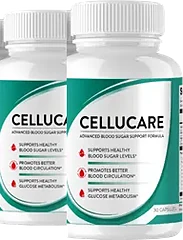
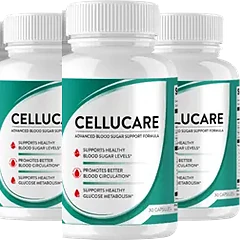
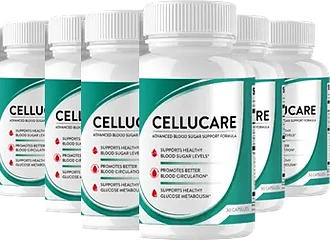
Per-day figures divide each total by the days the seller names, at one bottle per 30 days. The page publishes no capsule count, so we can't test that. The two-bottle figure leaves out shipping.
The seller's own figures hold up. $79 times two is $158. $69 times three is $207. $49 times six is $294.
Bing's AI answer gets the price wrong. It tells US searchers the cost is "$49-$98 per bottle depending on promotions". The seller's range is $49 to $79. The figure $98 appears nowhere on the page.
The same answer says the guarantee runs "60- to 90-day" depending on retailer. The seller states 60 days, and only 60.
Our price page walks through the cost in more detail.
What the 60-day refund really involves
A real guarantee, with costs the headline doesn't carry
If your worry is "will I lose my money", the refund terms are the answer. Read them closely. The headline says 100% money back. The full terms say more.
The seller writes: "CELLUCARE comes with a 100% money back guarantee - 60 full days from your original purchase ... simply return the product, even your empty bottles, anytime within 60 days of your purchase and you'll receive a full, no-questions-asked refund (minus shipping and handling fees)."
Two conditions are missing from the headline.
- You ship the bottles back, empties included, at your own cost.
- Shipping and handling isn't refunded. The terms give no figure for that deduction.
On the two-bottle pack, the shipping charge has no stated amount, so you can't know what you'd lose.
The 6-bottle pack is sold as a 180-day supply. The guarantee lasts 60 days. It ends with four months of product left, so you'd have to judge the capsules early.
In the seller's favor, the terms are printed and specific. BuyGoods is a named company you can contact. We haven't ordered the product or tested a refund, so we can't say how it works in practice.
Where CelluCare falls short, and what is fair to say
Five real drawbacks, and the parts that hold up
At least four are never disclosed. No Supplement Facts panel appears anywhere on the page.
Pine bark trials show a lower dose beating a higher one. Without a figure, nobody can compare the capsule to a trial.
Five entries cover berberine, olive leaf, bitter melon, guggul and phosphatidylserine. Six more have nothing to do with the product.
You ship the bottles back, empties too, and shipping and handling is deducted. The six-bottle pack outlasts the window.
The headline quotes a "Leading Doctor" with no name. Juniper berry is credited with reducing blood pressure.
Where it falls short
- The page claims over 12 ingredients and names eight.
- There's no Supplement Facts panel, serving size or capsule count.
- Six references are about air pollution, dementia and other unrelated subjects.
- The refund needs the bottles back at your cost, minus shipping and handling.
- "Reduces blood pressure" is a disease claim on a page that denies treating disease.
What's in its favor
- The claims stay restrained. We found no cure language.
- The discount arithmetic is correct on all three packs.
- BuyGoods is named as retailer of record, with a Delaware address.
- Seven references cover ingredients the page does name.
- Turmeric, cocoa and pine bark have deep human literatures.
Who is CelluCare for, and who should skip it?
A quick way to sort yourself into one list or the other
It might suit you if you're comfortable buying a formula whose amounts you can't see. You'd be trusting the seller's word on every dose. Start with the two-bottle pack and keep the return window in mind.
Skip it if you want to hold a capsule up against a trial. The numbers to do that don't exist here.
Skip it if you take glucose-lowering medicine and won't speak to your prescriber first. Think before ordering six bottles too. The refund window closes with four months of product unused.
The same plants, with the amounts printed
What disclosure looks like, and why the price isn't the issue
We looked up two NOW products on nowfoods.com on 29 September 2026. We chose them because each covers an ingredient CelluCare names, and each prints its amounts. They aren't recommendations.
| CelluCare | NOW Turmeric Curcumin | NOW Pycnogenol 100 mg | |
|---|---|---|---|
| Amount a serving | Not published | Turmeric root extract 665 mg, standardized to min. 95% curcuminoids (630 mg) | Pycnogenol pine bark extract 100 mg, plus amla extract 240 mg |
| Ingredients | 8 named, over 12 claimed | 1 | 2 |
| Supplement Facts panel | None | Published | Published |
| Price | $158 to $294 a pack | $26.24, regular $34.99 | $89.88 |
| Size | Capsule count not published | 60 capsules, 60 servings | 60 capsules, 60 servings |
| Cost a day | $1.63 to $2.63 at the seller's 30-day bottle | About $0.44 | About $1.50 |
Here's the fair point. NOW Pycnogenol alone costs $1.50 a day. CelluCare costs $1.63 a day at the six-bottle price for a whole formula. So CelluCare isn't obviously overpriced.
Add NOW's turmeric and two of the eight ingredients cost $1.94 a day. Price isn't the complaint.
The problem is that nothing tells you what's in the capsule. NOW's turmeric label prints the extract weight and the curcuminoid share inside it. You can hold that number against the trials. CelluCare gives you nothing to hold.
How do you check any supplement yourself?
Five checks, in the order we ran them on this one
Open the sales page in a browser. Read the order blocks, FAQ and footer, not only the headline.
Find the Supplement Facts panel. If there's none, note that no amount is given for any ingredient.
Read each cited source. Ask whether it studies the product, an ingredient in it, or something unrelated.
Search the product name, then each named ingredient. Count the randomized trials and read the best ones.
Check each discount subtraction. Divide each price by the days it lasts. Read the guarantee terms in full.
Why we gave it 1 out of 10
What earned its one point, and what cost the rest
Here's what the page gets right. Our scale doesn't pay points for most of it.
- The claims are restrained, with no cure language.
- The discount subtractions are correct on every pack.
- BuyGoods is named as the retailer of record.
- The reference list includes real studies of real ingredients in the formula.
- The named plants have large human literatures.
The score has four parts. Here's how each one came out.
- Disclosure, 0 of 4. It claims over 12 ingredients and names eight. The two counts disagree.
- Dosing, 0 of 3. No amount is published, so no dose can be checked against a trial.
- Money back, 1 of 2. The window is 60 days. But the bottles must come back, and shipping and handling is deducted.
- Honesty, 0 of 1. Every saving is measured against $179 a bottle, and no pack sells at that price.
Other problems don't change the number, but you should know them. The reference list names ingredients the page doesn't, and six references are off topic. The page also quotes an unnamed doctor and credits juniper with reducing blood pressure.
CelluCare now ties Gluco Cleanse Tea, the last blood-sugar product we scored, at 1 out of 10. The tea promised to fix type 2 diabetes and published no label. CelluCare makes quieter claims, but the scale weighs the label most.
The label is where it loses most. The plants aren't the issue. We just can't see what's in the bottle.
Questions buyers ask about CelluCare
Short answers, each traceable to something on this page
What is CelluCare?
A blood-sugar support capsule sold in bottles through BuyGoods. The seller claims over 12 ingredients and names eight of them.
How much does CelluCare cost?
Two bottles cost $158 plus shipping, three cost $207 and six cost $294. That works out to $2.63, $2.30 and $1.63 a day.
What ingredients are in CelluCare?
The seller names turmeric, cocoa bean extract, eleuthero, gymnema, juniper berry, pine bark extract, banaba leaf and butcher's broom. It publishes no amounts.
Does CelluCare have a money-back guarantee?
Yes, for 60 days. You must return the bottles, empties included, at your own cost. Shipping and handling is deducted from the refund.
Has CelluCare been tested in a clinical trial?
We found none. Europe PMC returned one record for the name, and it's a 2011 paper on a different product.
How we reviewed this
- Read the rendered sales page in a browser on 29 September 2026, order blocks and footer included.
- Recorded every pack, price, shipping line and discount exactly as shown, then checked each subtraction.
- Read all 21 entries in the seller's reference list and sorted each by subject.
- Queried Europe PMC live for the product name and each of the eight ingredients. Every study is cited by PubMed ID.
- Read the Bing results a US searcher sees. Checked its ingredient, price and guarantee answers against the seller's page.
- Looked up two NOW products and read each Supplement Facts panel.
- We didn't take the product or test a refund. This is desk research on what the seller publishes. No personal trial, and no invented customer stories.
If any of this stops matching what you find, tell us through the contact page. We'll correct it with a dated note.
That link goes to the seller's own site. We earn a commission if you buy, at no extra cost to you, and it never changes what we write. Our full review has the score and the verdict.
This page is information, not medical advice. Statements about supplements have not been evaluated by the FDA.