CelluCare Ingredients: Twelve Claimed, Eight Named, and Four Bing Made Up
The seller promises over twelve ingredients and names eight. Bing's own answer names four that appear nowhere on the seller's page.
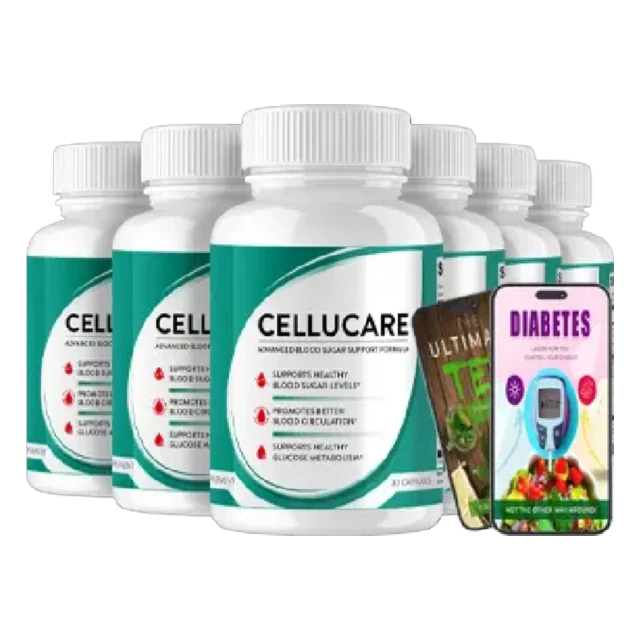
Checked 29 September 2026. Label and price figures checked 29 September 2026. Every source is named below, so you can repeat each check yourself.
Why does CelluCare claim twelve ingredients but name only eight?
What the seller lists, and what it leaves off the page
CelluCare's seller names eight ingredients: turmeric, cocoa bean extract, eleuthero, gymnema, juniper berry, pine bark extract, banaba leaf and butcher's broom. It claims over twelve, publishes no Supplement Facts panel and gives no amount for any ingredient.
The seller's page heads its ingredient section "Over 12 Carefully-Selected Ingredients". It then names eight. We read the page on 29 September 2026.
There's no Supplement Facts panel anywhere on it. The page gives no amount for any ingredient. It gives no serving size and no capsule count either.
So you get names and claims, and nothing to weigh them against. This page covers what the seller says and what it leaves out. It also covers where Bing's AI answer goes wrong.
A Bing search for the full CelluCare ingredient list and supplement facts returned 1,120 results. No AI answer appeared above them.
The eight ingredients CelluCare names
In page order, with the seller's own claim for each
| Ingredient | Latin name | Seller's claim | RCT records |
|---|---|---|---|
| Turmeric rhizome | Curcuma longa | "Supports blood sugar levels" | 1,201 |
| Cocoa bean extract | Theobroma cacao | "Supports blood flow" | 659 |
| Eleuthero | Eleutherococcus senticosus | "Increases energy & reduces fatigue" | 36 |
| Gymnema | Gymnema sylvestre | "Supports healthy heart & blood sugar" | 17 |
| Juniper berry | Juniperus communis | "Reduces blood pressure" | 23 |
| Pine bark extract | Pinus | "Reduces inflammation" | 99 |
| Banaba leaf | Lagerstroemia speciosa | "Improves digestion and heart health" | 11 |
| Butcher's broom | Ruscus aculeatus | "Supports better blood circulation" | 4 |
A trial count shows how much human research exists on a plant. It's not a verdict, and it isn't evidence about this capsule. The does-it-work page covers what the trials found.
This list is better evidenced than the last blood-sugar formula we reviewed. Curcumin has 1,201 randomized trials and cocoa has 659. Butcher's broom has just 4.
One claim needs flagging. The page says "Juniper Berry - Reduces blood pressure". That's a disease claim. It sits on a page carrying the FDA statement that the product isn't meant to treat any disease.
The other claims are restrained. They say "supports" and "improves", and nothing on the page promises a cure.
How much research backs each ingredient?
Three tiers, judged by trial count alone
Sort the eight by trial count and three tiers appear.
Deep. Turmeric has 1,201 records, cocoa has 659 and pine bark has 99. These are the plants with a large human literature.
Middle. Eleuthero has 36 records, juniper has 23 and gymnema has 17. There's real research, but far less of it.
Thin. Banaba has 11 records and butcher's broom has 4. The seller's banaba reference is a study in diabetic mice, so it says nothing about people.
None of this tells you what's in the capsule. It tells you how much research exists on each plant. It says nothing about the amount inside.
Twelve minus eight is four. But the wording is "Over 12", so four is the floor, not the total.
The page never names the missing ingredients. We can't tell you what they are. We can't tell you how much of them each capsule holds.
Other pages on Bing point at the same hole. One PDF says CelluCare has "eight natural ingredients". That matches the named count and contradicts the seller's own "Over 12".
The same PDF calls them "all FDA-approved". That's wrong on its face, because the FDA doesn't approve dietary supplement ingredients.
A second page, pvmedcenter.com, says anyone considering CelluCare "should request a full ingredient list with specific dosages". We agree. The seller's page doesn't offer one.
A correction: Bing's list is mostly wrong
Two of its six ingredients are real, and six real ones are missing
Bing's AI answer for a "cellucare review" search calls CelluCare a "12-ingredient blend including" six named ingredients. We checked each against the seller's page.
| Ingredient | Bing's AI answer | Seller's page |
|---|---|---|
| Berberine | Names it | Never named. One berberine study is in the reference list. |
| Chromium picolinate | Names it | Nowhere on the page. |
| Alpha lipoic acid | Names it | Nowhere on the page. |
| CoQ10 | Names it | Nowhere on the page. |
| Gymnema sylvestre | Names it | Named. |
| Turmeric (curcumin) | Names it | Named. |
| Cocoa bean extract | Omits it | Named. |
| Eleuthero | Omits it | Named. |
| Juniper berry | Omits it | Named. |
| Pine bark extract | Omits it | Named. |
| Banaba leaf | Omits it | Named. |
| Butcher's broom | Omits it | Named. |
Two of Bing's six are real. Six real ingredients never appear in its answer.
Chromium picolinate, alpha lipoic acid and CoQ10 appear nowhere on the seller's page, in any context. Berberine is never named as an ingredient. It shows up only as a study in the reference list.
Ask Bing what's in CelluCare and you hear about three ingredients the seller's page never mentions. Any evidence offered for them is about ingredients the seller hasn't said are in the bottle.
We can't rule them out. They could be among the undisclosed four. But the seller hasn't said so.
The same answer gets the refund and price wrong. It says 60 to 90 days and $49 to $98 a bottle. The seller says 60 days and $49 to $79. The price page has the real figures.
The five extra ingredients the reference list names
Studies of ingredients the page never lists
The seller lists 21 references under "Scientific References". Some are real studies of named ingredients. They cover turmeric, cocoa, eleuthero, juniper, pine, banaba and butcher's broom.
That's a real step up. The last blood-sugar product we reviewed cited references about the disease and nothing else.
Five references cover ingredients the page never names: berberine, olive leaf, bitter melon, guggul and phosphatidylserine.
Either some of them are the hidden ingredients. Or the list is padded with studies of things that aren't in the bottle. It could be both. We can't tell which, and the page gives you no way to check.
That matters for two reasons. If they're in the capsule, you're taking ingredients the label never lists. If they aren't, the list borrows credibility from plants that aren't in the product.
Several of the named botanicals are studied for lowering blood glucose. If you take insulin, metformin, a sulfonylurea or a GLP-1 agonist, ask your prescriber first. Don't change a prescribed dose on your own. An ingredient nobody discloses is one your doctor can't check. The side effects page goes further.
Six more references are about neither the product nor any ingredient. Topics include air pollution, heavy metals in Athens air, Alzheimer's disease and post-cardiac-arrest intensive care. The banaba citation is a mouse study.
What a published amount looks like
Two single-ingredient labels, for comparison
We read two labels on nowfoods.com on 29 September 2026. We name them for what they print. They aren't recommendations, and we haven't tested them.
NOW Turmeric Curcumin states 665 mg of turmeric root extract per capsule. It's standardized to at least 95% curcuminoids (630 mg). It costs $26.24 for 60 capsules, or $0.44 a day.
NOW Pycnogenol 100 mg prints 100 mg of French maritime pine bark extract. It adds 240 mg of amla extract. It costs $89.88 for 60 capsules, or $1.50 a day.
You can hold either number against a trial. You can't do that with CelluCare.
At $1.63 a day on the six-bottle pack, CelluCare isn't obviously overpriced for a whole formula. The problem is that nothing tells you what's in it.
What to ask before you buy CelluCare
Four questions the seller's page doesn't answer
The seller's page has an FAQ that covers dosing. It still publishes no serving size and no capsule count. So put four questions to the seller before you pay.
First, what are all the ingredients, including the ones beyond the eight? Second, how much of each is in a serving? Third, how many capsules make a serving?
Fourth, are berberine, olive leaf, bitter melon, guggul and phosphatidylserine in the bottle? Those are the five the reference list names.
If the answer is a real Supplement Facts panel, you can hold each amount against a trial. If it isn't, you're buying without the numbers.
Common questions about these ingredients
Short answers, each traceable to something above
What are the ingredients in CelluCare?
The seller names eight: turmeric, cocoa bean extract, eleuthero, gymnema, juniper berry, pine bark extract, banaba leaf and butcher's broom. It publishes no amount for any of them.
How many ingredients does CelluCare have?
The seller says "Over 12" and names eight. At least four are never disclosed. No Supplement Facts panel appears anywhere on the page.
Does CelluCare contain berberine, chromium, alpha lipoic acid or CoQ10?
The seller names none of them. Chromium, alpha lipoic acid and CoQ10 appear nowhere on its page. Berberine appears only as a study in the reference list.
Is there a Supplement Facts panel for CelluCare?
No. The seller's page shows no panel, no amount, no serving size and no capsule count.
Do CelluCare's ingredients have clinical evidence?
The plants do. Curcumin has 1,201 randomized trials and cocoa has 659. The product itself has no published study.
For the trials, read does CelluCare work. For the full verdict and score, see our review.
This page is desk analysis. We haven't tested CelluCare. Everything here comes from the seller's page, Bing and Europe PMC, all read on 29 September 2026. If something changes, tell us through the contact page and we'll add a dated correction.
That link goes to the seller's own site. We earn a commission if you buy, at no extra cost to you, and it never changes what we write. Our full review has the score and the verdict.
This page is information, not medical advice. Statements about supplements have not been evaluated by the FDA.